
Watership Down: Its Biblical Parallels and Allusions
Posted: January 5, 2017 Filed under: Speculative Fiction | Tags: Biblical themes in Watership Down, Judeo-Christian themes found in Watership Down, Watership Down's biblical parallels, Watership Down's creation narrative, Watership Down's parallel to Israel's flight from Egypt in Exodus chapter 14 4 CommentsWhether it’s literature, music, cinema, or anything creative, I view the work and critique it through a theological lens. Richard Adams’ wonderful book, Watership Down receives the same treatment. I have written of the spiritual dimensions of the characters in earlier postings, e.g. Hazel, Bigwig, and Lord El-ahrairah. While reading through the book’s pages I noted many times the biblical parallels that Adams places in his first work. In this posting there will be a few examples of biblical references, or allusions. The mythology and primitive religion in this novel has no direct correspondence to Christianity — Adams does not write an allegory. In fact, Adams has stated in interviews that he intended no spiritual or religious theme to be in the book. But, again, parallels and allusions are found — and with some you would have to be a bit myopic not to see them.
Mary’s Christmas Offering
Posted: December 26, 2016 Filed under: The Eucharist and Living the Eucharist | Tags: Christ is born to be consumed in the Eucharist, Christ's teaching on the Eucharist in John chapter six, John 6: 48 -51 and the Eucharist, Mary offers her Son by laying him in a manger, Mary's offering of Christ in Bethlehem, Mary's one priestly action Leave a comment In the Orthodox Church Christmas is also known the Feast of the Nativity of our Lord and Savior Jesus Christ. Rightly, we focus on our Lord’s birth. Rightly, we celebrate the birth of God in human flesh. The other person of note is Christ’s mother, Mary. In the Church’s theology she is called Theotokos, meaning Bearer of God. She gave birth to God because God took flesh from her.
St. Luke gives us the birth narrative:
In those days a decree went out from Caesar Augustus that all the world should be enrolled…And all went to be enrolled, each to his own city. And Joseph also went up from Galilee, from the city of Nazareth, to Judea, to the city of David, which is called Bethlehem…And while they were there, the time came for her to be delivered. And she bore her firstborn son, and she clothed him and laid him to bed in a feeding trough (Luke 2: 1, 3, 4, 6 – 7).
Sunday of the Forefathers of Christ
Posted: December 16, 2016 Filed under: The Eucharist and Living the Eucharist | Tags: Banquet of the Kingdom of God, Invation to the Banquet of the Kingdom of God, living as priests of God, Luke 14: 16 - 24, spiritual excuses, Sunday of the Forefathers Leave a comment When Christmas is about two weeks away the Church commemorates the ancestors of Christ. On this Sunday Abraham, Isaac, Jacob, David and many other men and women are remembered and honored. All were flawed, but all proved, in the end, to be faithful. One by one their lives of faith in the flesh led to the birth of Christ who took flesh from their daughter, Mary. Here in their numbers we find a family. This lineage begins with Abraham and Sarah, expands into multitudes, and then is compressed to one young virgin from whom the One prophesied about takes flesh. From him we have another expansion into the multitudes of all who have faith in Jesus Christ. In our numbers we, too, are incorporated by adoption into this family of faith.
Guitar Review: Faith Mars FRMG All Mahogany Dreadnought
Posted: November 17, 2016 Filed under: Music and Guitars | Tags: Faith FRMG Mars mahogany slope shoulder dreadnought, Guitar review of Faith Mars FRMG slope shoulder dreadnought, Guitar Review: Faith FRMG Mars mahogany dreadnought Leave a comment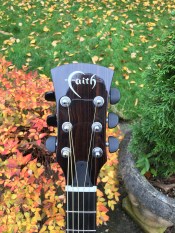 I first learned of the existence of Faith guitars about two or three years ago. I was, naturally, intrigued by the name: I am a priest, and thus I am all for faith. If you go to their website you will find a wide array of acoustic guitars, all designed by owner and master luthier Patrick James Eggle. His guitars have a solid following in the U.K., and the brand has won the award of the U.K’s Best Acoustic Guitar for four consecutive years. Rather impressive. The brand is now available in the United States as a new British Invasion. And just like the lads from Liverpool, the reviewed guitar is FAB!
Watership Down Podcast: Emerging from Darkness into Light
Posted: November 5, 2016 Filed under: Speculative Fiction | Tags: Hazel's imitation of El-ahrairah, Imitatio Christi as spirituality, Podcast about Watership Down, Watership Down's contrasts of darkness/death and light/life, Watership Down's spirituality Leave a comment In August, 2016 Doxacon Seattle took place at South Seattle College. This year’s Doxacon theme took on the contrast of Darkness and Light. The following podcast is the recording of my presentation on the emergence of the rabbits of Richard Adam’s fabulous story from darkness and death into light and life; their emergence from restriction into full expression of being and person as they imitate their Lord El-ahrairah. It is a story of their salvation. It is thus, a story of our own salvation in Christ as we as Christians imitate our Lord Jesus Christ. The link below comes from Ancient Faith Radio.
In Christ,
Fr. Irenaeus
California Dreamin’: Prayer and Chords
Posted: November 5, 2016 Filed under: Music and Guitars | Tags: California Dreamin' and prayer, California Dreamin' chords Leave a comment “California Dreamin’” is one great pop song. It was written by John and Michelle Phillips while living in New York City in 1963. Their version of the song was released in December, 1965, and, well, the rest is history. “California Dreamin’” is, in my opinion, the signature song of the Mamas and the Papas. It remains an evergreen song, and is a boatload of fun to play on acoustic guitar.
Fender Paramount PM-1 Standard Dreadnought All-Mahogany NE
Posted: October 22, 2016 Filed under: Music and Guitars | Tags: Fender Paramount All-Mahogany Dreadnought, Fender PM-1 Standard Dreadnought All-Mahogany NE review, Guitar review: Fender PM-1 Standard Dreadnought All-Mahogany NE Leave a comment After dropping off an old appliance at a recycling center, I thought I’d swing by Ted Brown Music in Tacoma — just a slight detour. I recently learned of an addition to Fender’s Paramount acoustic line up. It is an all mahogany dreadnought. Ted Brown Music carries the Paramount line in addition to a nice selection of Fender electrics. My friend Gary at Ted Brown saw me walk into the acoustic room of the store. I asked him if there were any new arrivals. “We have a number,” he said. Then he added, “we have a new Paramount — the mahogany one.” That’s exactly the guitar I wanted to see. Could this be providence? He brought out the unopened box (I have never seen a freshly opened guitar before — quite an opportunity). “Do you want to give it a try?” Well, YES!
Temple and Seed
Posted: October 16, 2016 Filed under: The Eucharist and Living the Eucharist | Tags: 2 Corinthians 6: 16 - 17, Christian as Temple of God, God dwelling among his people, Hearing the Word of God, Let us attend to God's Word, Parable of the Sower, selective hearing, Union with God as salvation Leave a comment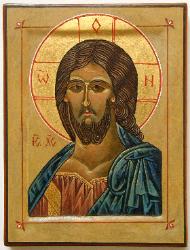 The scriptural readings for the 17th day after Pentecost are 2 Corinthians 6: 16 – 7:1, and the St. Luke 8: 5 -15, or the epistle and gospel respectively. From the epistle we read St. Paul’s words which he, in part, takes from both the Law and Prophets:
For you are the temple of the living God, just as God said, “I shall indwell and walk among them, I shall be their God, and they shall be my people” (2 Cor 6: 16).
Thus, the Triune God desires relationship with humanity. The Creator desires communion with his creatures. St. Paul is in agreement with St. John’s recording of Jesus’ words found in his High Priestly Prayer: “in order that all might be one, just as you, Father are in me and I in you, in order that even they might be in us…” (John 17: 21). Our salvation is not simply a juridical reality — a legal absolving of guilt. Christian salvation is a relational union with God: Father, Son, and Holy Spirit. Then, Jesus speaks of this union with himself by the Eucharist: “The one who is eating my flesh and drinking my blood abides in me, and I in him” (John 6: 56).
Guitar Review: Cordoba Acero D10-ce
Posted: October 10, 2016 Filed under: Music and Guitars | Tags: Cordoba Acero D10-ce dreadnought review, Guitar review Cordoba Acero D10-ce 4 Comments Quality and value: these are two traits that any consumer wants coupled together when considering a purchase. Sometimes this combo is elusive, but in today’s guitar market these two qualities are the norm in this “golden age” of modern lutherie. In fact, you have to be most unlucky to buy a “lemon” of a guitar. So, I come to this review of the Cordoba Acero D10-ce, a guitar that fully embodies both quality and value in an all sold wood import package.
“Now is the Day of Salvation”
Posted: October 10, 2016 Filed under: The Eucharist and Living the Eucharist | Tags: 2 Corinthians 6: 2, Ephesians Ephesians 1: 9 - 10, Eucharist as manifestation of the Recapitulation, Gathering around Christ in the Eucharist, Luke 7: 11 - 16, Raising of the Widow of Nain's Son, Recapitulation Leave a commentThe Old Testament Scriptures speak of an acceptable hour. St. Paul also uses this phrase to declare the importance — even urgency — of reconciliation to God. He writes this quoting the prophet Isaiah: “‘In the acceptable time I heard you, and in the day of salvation I helped you.’ Behold, now is the acceptable time, behold now is the day of salvation!” (2 Cor 6: 2).
 I had the privilege of serving The Divine Liturgy at St. Katherine’s Church in Pullman, Washington on October 9, 2016. The above passage came from the epistle reading of the day (2 Cor 6: 1—10). The epistle preceded the Gospel reading which relays the account of Jesus’ raising to life the only son of the widow of the city of Nain (Luke 7: 11 — 16). In this gospel pericope there are two very contrasting gatherings and processions. Here we have the description of the first gathering: “And it happened in the next day while he was going to the city of Nain, and his disciples and a great crowd were going with him (Luke 7: 11).” This gathering is assembled around Jesus. This gathering is assembled around his Life and Light. The other gathering has assembled for a quite different purpose. “Now as he drew near the city gate, there was a burial procession of mother’s dead only son, and she was a widow, and a great crowd was together with her” (Luke 7: 12). This assembly gathered around death and grief.
“If I Am Lifted Up…”
Posted: September 14, 2016 Filed under: The Eucharist and Living the Eucharist | Tags: dying to self, Dying to the world system, Feast of the Elevation of the Precious and Life-giving Cross, Giving thanks for crosses in out lives, Little crosses, Take up your cross Leave a comment September 14 marks the commemoration of the rediscovery of the Cross of Christ in Jerusalem in the fourth century. This feast day is known as the Elevation of the Precious and Life Giving Cross in the Orthodox Church. For the Christian, the Cross of Christ is always and every day to be understood as precious and life giving. As it was elevated in Jerusalem by the city’s patriarch, St. Marcarius, so today’s 21st century Christian is to elevate the Cross in his or her consciousness. Further, the Cross is not to comfort, but to challenge, to alarm, and even offend — even more, to bring about death. St. Paul writes of this: “The message of the Cross is foolishness to those who are perishing, but for those who are being saved it is the power of God” (1 Cor 1: 18).
That We Might See
Posted: August 29, 2016 Filed under: Etcetera, The Eucharist and Living the Eucharist | Tags: a dog's love and acceptance, eyesight of the child, Mt 9: 27 - 30, restoration of spiritual eyesight, seeing with the eyes of Christ, sight without prejudice, spiritual eyesight, the human through the eyes of a dog, the sight of innocence Leave a comment The lectionary for seventh Sunday after Pentecost gives us the Gospel account of the healing of two blind men. The duo follow Jesus and cry out to him, “Have mercy on us, Son of David!” Upon entering a house these two men approach Jesus. Jesus says to them, “Do you believe that I am able to do this?” They reply, “Yes, Lord.” Then “[Jesus] touched their eyes saying, ‘According to your faith let this be for you.’ “And their eyes were opened” (Mt 9: 27 — 30). For these two men the first object they see is their Healer, their Savior — the One who is God Incarnate. How blessed were those four eyes!
Others of us were born sighted. The first object we laid eyes on (however imperfectly as newborns) was likely the face of our mother, itself also a blessing. As sighted infants and then children we took in the creation around us with frequent awe and wonder. We saw creation through eyes of innocence. As a child I had eyes that took no account of the size of my friends’ houses, the cars their parents drove, and took no care of the occupation of father or mother.
Wateship Down Characters: General Woundwort
Posted: August 18, 2016 Filed under: Speculative Fiction | Tags: General Woundwort as antagonist of Watership Down, Significance of General Woundwort in Watership Down, Watership Down character General Woundwort Leave a comment
General Woundwort
Every novel needs a villain or two. Watership Down is no different — Richard Adams gives his readers General Woundwort, the dictatorial Chief Rabbit of the Efrafan Warren. Adams provides the General’s “bio” in chapter 34.
General Woundwort was a singular rabbit. Some three years before, he had been born — the strongest of a litter of five — in a burrow outside a cottage garden near Cole Henley. His father, a happy-go-lucky and reckless buck, had thought nothing of living close to human beings except that he would be able to forage in their garden in the early morning.
John 2: 1 – 11 – The Wedding at Cana, Mary’s First Act as Queen Mother
Posted: August 13, 2016 Filed under: Etcetera | Tags: Exegesis of John 4: 4, Interpretation of the Wedding at Can, John 2: 1 - 11, Mary as Intercessor, Mary as Intercessor in John 2: 4, Mary as Queen Mother, Mary as Queen Mother to Jesus, Mary's act of intercession in the Wedding at Cana, Mary's first act of intercession in John 2: 4 Leave a commentThe title Queen Mother refers to the mother of the king, or the reigning monarch. In the Ancient Near East (ANE) the king would have multiple wives, as did David, and as did Solomon. To prevent favoritism, and intrigue, the ANE kings’ mothers were the queens — the Queen Mothers. Typically, the Queen Mother was an intermediary between subjects and the monarch.
We have a biblical example found in 3 Kingdoms (1 Kings) chapter two. King David has died and has named Solomon king. He has been anointed and enthroned to the surprise of David’s eldest son, Adonijah. With Solomon as king, his mother, Bathsheba, is now Queen Mother. In the following pericope, we see Bathsheba’s role and actions as the new Queen Mother:
Now Adonijah the son of Haggith came to Bathsheba the mother of Solomon and bowed down before her… “Now I ask one petition of you. Do not turn away your face.” Bathsheba said to him, “Speak.” Then he said to her, “Speak to King Solomon, for he will not turn his face from you; and let him give me Abishag the Shunammite for a wife.” So Bathsheba said, “Very well, I will speak for you to the king (3 Kingdoms 2: 13, 16 — 18).
Watership Down — The Warren of the Snares
Posted: August 10, 2016 Filed under: Speculative Fiction | Tags: Commentary on Warren of the Snares in Watership Down, Meaning of Warren of the Snares in Watership Down, Watership Down Warren of the Snares Leave a comment There were three warrens Hazel and the others rabbits encountered which threatened their existence before the establishment of Watership Down as their home. They fled the unknown and unnamed threat of slaughter in the warren of their birth — the Sandleford Warren. After their flight from death into the unknown, they come upon a sleek, handsome, and sophisticated rabbit named Cowslip. “He had the air of an aristocrat and as he turned to gaze at Blackberry from his great brown eyes, Hazel began to see himself as a ragged wanderer, leader of a gang of vagabonds” (p. 65). We then have the initial interaction between the two groups of rabbits:
“We’ve come over the heather,” he [Hazel] said.The other rabbit made no reply, but his look was not that of an enemy. His demeanor had a kind of melancholy which was perplexing.
“Do you live here?” asked Hazel, after a pause.
“Yes,” replied the other rabbit; and then added, “We saw you come.”
“We mean to live here, too,” said Hazel firmly.
The other rabbit showed no concern. He paused and then answered, “Why not? We supposed you would. But I don’t think there are enough of you, are there, to live very comfortably on your own?”’
Hazel felt puzzled (p. 65).
Guitar Review: Fender Paramount Series Deluxe PM-1 Dreadnought
Posted: August 1, 2016 Filed under: Music and Guitars | Tags: Fender Paramount PM-1 Deluxe Dreadnought, Fender Paramount PM-1 Deluxe Dreadnought guitar review, guitar review Fender Paramount Deluxe Dreadnought Leave a commentThis is the “Golden Age” of guitar making. Acquaintances in the guitar stores I frequent enthusiastically agree with my non-professional assessment. Guitars, both acoustic and electric, have never before been so well made. America has been a leader in the innovations that produce such wonderful instruments. Manufacturers such as Taylor, Breedlove, Martin, Collings, and so many others, have changed the guitar world. However, their innovations aren’t held within the geographical boundaries of the United States — the quality of asian made guitars matches those of America and Canada. I have reviewed two Eastman guitars, two Bedell Performance Series guitars, and one Cordoba Acero Series guitar previously in this blog. All of these guitars are manufactured in China — a put-off for some guitarists — but a blessing for guitarists who want a quality instrument at a more affordable price. In this posting I review Fender’s PM-1 Deluxe Dreadnought, a guitar that is part of its new Paramount line of acoustics.
The Ever Present Present
Posted: June 30, 2016 Filed under: Etcetera | Tags: concept of time, ever present present, linear concept of time is an illusion, philosophy of time, theory of time, time is a measurement of movement Leave a comment I recently overheard a conversation of a pair of elderly friends reminiscing about a wonderful experience they shared many years ago. One of the women wistfully commented, “I wish we could go back to those days.” She and her friend remained in the lobby — they were not whisked back to another year, say 1964 for example.
I come to a favorite topic of mental rumination: time. Time is simply the measurement of rate of movement of an object or objects within a defined spacial relationship. For example, a year is the measurement of the time it takes the earth to make a complete orbit around the sun. A day is only the amount of time it takes the earth to make a complete turn upon its axis. A day is broken down to 24 hours, each hour lasts 60 minutes, and each minutes lasts 60 seconds. Another measurement of time, for example, is the sprinters’ times to run the course of 100 meters. Time does not exist as an entity for us who are three dimensional creatures.
Watership Down Character — Fiver
Posted: June 26, 2016 Filed under: Speculative Fiction | Tags: Fiver - the mystic of Watership Down, Fiver of Watership Down, Fiver's significance in Watership Down Leave a comment
Hazel and Fiver
The Character of Fiver in Richard Adams’ Watership Down can easily be overlooked. Fiver can be passed over by the reader and assigned a secondary role behind Hazel and Bigwig, or Thlayli. However, this is a mistake. In fact, Fiver’s role as prophet, seer, and mystic propels the rabbits forward on their adventure of discovery and transformation. His gifts save the rabbits and bring clarity to their encounters and their mission – to create a new type of warren for a new breed of rabbit.
Read the rest of this entry »
The Longest Day of the Year
Posted: June 23, 2016 Filed under: The Eucharist and Living the Eucharist | Tags: acting in soldarity, compression of time, experience of time, solidarity 1 Comment
Foxglove
The patients of the anticoagulation and diabetes clinic in which I work often make statements which prompt some reflection. “Well,” he said, “today is the longest day of the year.” He referred to the summer solstice. This day holds out the longest period of daylight of the year. This day is not longer than any other day — it lasts only 24 hours. However, this particular day holds some degree of dread for me. With the very next day those wonderful, lingering, warm daylight hours begin to gradually shrink. They shrink to the dim, gloom, and dark of late autumn and winter (I live in western Washington).


Sacrifice, Priesthood, and Solidarity
Posted: December 22, 2016 | Author: Fr. Irenaeus | Filed under: The Eucharist and Living the Eucharist | Tags: Acting in solidarity with all as God's priests, Commentary on Luke 22:19 - 20, Eucharist is a re-presentation of Christ's sacrifice on the cross, Jesus as High Priest, Jesus' actions in the Last Supper as found in Luke 22: 19 -20, Priesthood of all believers, Words of Institution in Luke 22: 19 - 20 | Leave a commentThe phrase in the above text of interest is “once for all” coming from the Greek word ephapax. This word has brought about a good deal of argument from Protestants. Let me make it clear: it is not the Eastern Orthodox position, nor Roman Catholic position, that the bloodless sacrifice of the Divine Liturgy (or the Latin Mass) is a re-offering of Christ. In other words Christ is NOT sacrificed again, as far too many ill-informed Protestants teach about our understanding of this sacrament. No, the sacrifice of Christ was done once, and done for all! It is very clear in the Orthodox Church’s prayers found in the anaphora and elsewhere in the Eucharistic prayers, that the offering of the Eucharist is a thanksgiving offering, reasonable, and bloodless. The prayers of the Eucharist make this very clear — Christ’s once for all sacrifice is RE-presented to us by the Eucharist!
Read the rest of this entry »