The Synaxis of the Twelve Apostles
Posted: June 30, 2019 Filed under: Etcetera, The Eucharist and Living the Eucharist | Tags: Apostolic succession and the Eucharist, Commemoration of the Twelve Apostles, commissioning of the twelve apostles, Jesus authority and ministry is extended to the Apostles, Jesus gives authority to the Apostles to forgive sins, John 20: 21 - 22 and the Apostles authority to forgive sins, Mt 10: 1- 8 and the commissioning of the 12 Apostles, The Apostles' ministry continues in the 21st century Church, the Feeding of the 5000 as a New Testament type of the Eucharist., The Synaxis of the Twelve Apostles Leave a comment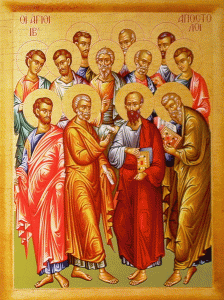 On June 29 of every year the Church celebrates the Feast of Sts. Peter and Paul. The following day is the Synaxis (gathering together) of the twelve Apostles, when all twelve are commemorated. The day’s gospel reading is taken from St. Matthew 10: 1 – 8, and we are informed that Jesus gave them authority over unclean spirits (to cast them out), and to heal every disease and illness. We learn of their names: “Simon (who is called Peter), his brother Andrew; James the son of Zebedee, and his brother John; Philip and Bartholomew; Thomas, and Matthew the tax collector; James, son of Alphaeus and Thaddeus; Simon the Cananaean, and Judas Ischariot, who betrayed him” (10: 2 – 4). Jesus then sent and commissioned them to go to the perishing sheep of the House of Israel. They were to proclaim that “the Kingdom of Heaven has drawn near.” They were to heal diseases, raise the dead, cleanse lepers, cast out demons. As they received freely, so they were to give (10: 6 – 8).
Sunday of the Cross
Posted: April 1, 2019 Filed under: The Eucharist and Living the Eucharist Leave a comment The third Sunday of Lent is known as the Sunday of the Cross. Its gospel reading comes from Mark 8:34 – 9:1. Mark 8:34 reads, “And after receiving the crowd together with his disciples he said to them, ‘If someone wills to follow after me, let him deny himself, take up his cross and follow me.’”
We do not do this alone, our Lord always leads us in the way. A few verses earlier he states, “…it is necessary for the Son of Man to suffer much, and be rejected by the elders, chief priests and scribes and to be killed and after three days to rise again (8:31).” Following Jesus’ words, Peter rebukes him, then Jesus rebukes Peter: “Get behind me Satan…” Peter had the way of world in mind: SELF PRESERVATION.
We Must Do to Become
Posted: January 27, 2019 Filed under: Etcetera, The Eucharist and Living the Eucharist | Tags: 1Thes 5: 23, 24, Being clothed with Christ, Being thankful in all circumstances, Colossians 3: 12 - 16, Habits of the Christian, Our spiritual struggles reside in our minds, Putting Christ into practice, Renewing the mind to conform to Christ's mindset, the spiritual practice of Lectio Divina, We must do to become, Wearing Christ before the world Leave a commentChristian salvation is far more than a juridical proclamation of innocence: it is relational. Our salvation is an ontological union with the Jesus Christ, the second Person of the Holy Trinity. This union with Christ imparts to us our destiny in Christ. St. Paul writes of our union in Christ:
Therefore, if you were raised together with Christ, seek the things above, where Christ is sitting at the right hand of God. Think of the things above, not upon the things on earth. For you died [together with Christ] and your life has been hidden together with Christ in God. Whenever Christ, who is your life, might be revealed, then also you will be revealed together with him in glory (Col 3: 1 – 4).
Our lives are to correspond to this reality, and we are to “Put to death, therefore, the ‘earthly’ aspects of your life: immorality, impurity, passion, evil desire, and covetousness, which is idolatry” (Col 3:5). This list is not limited to these sins — St. Paul expects us to get the idea.
We are to have an additional response which requires positive action. As we are to eliminate corrupting habits, we also are to acquire new habits, new virtues:
Therefore, clothe yourselves, as the elect of God holy and beloved, compassion, kindness, lowliness, meekness, patience, forbearing one another and, if one has a complaint against another, forgiving each other; as the Lord has forgiven you, so you also must forgive. And over all these put on love, which binds everything together in perfection. And let the peace of Christ rule in your hearts to which you were called in one body. And become thankful (Col 3: 12 – 15).
ST. LUKE 5: 10 — “FEAR NOT!”
Posted: September 22, 2018 Filed under: The Eucharist and Living the Eucharist | Tags: Christ cleanses us in the Eucharist, cleansing by the hearing of the Scriptures, Jesus' words to St. Peter: "Fear not!", John 6: 50 - 56, Luke 5: 10 "Fear not!", Salvation and mercy in the Eucharist, Taste and see the Lord is good Leave a comment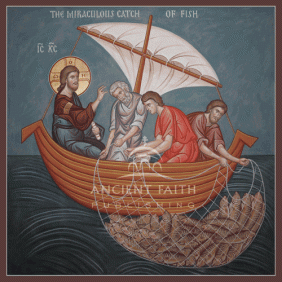 St. Peter had a life changing encounter with Christ one day along the Sea of Gennesaret. Christ was teaching the crowd a short distance off the shore in St. Peter’s boat. After he concludes his teaching, he instructs St. Peter to put out in the water and drop his nets. St. Peter reluctantly agrees. The result was an incredible, miraculous catch of fish. His response to Jesus was an emphatic: “Depart from me, Lord, for I am a sinful man” (Luke 5: 8). Jesus does not leave. He remains in the sinner’s presence and says to him, “Fear not! From now on you will be catching men” (Luke 5: 10).
St. Peter’s response should be the response of all of us. We are to acknowledge our sinfulness in the understanding of the holiness of God Incarnate — Jesus of Nazareth. Sin cannot exist in the presence of an all holy God. Darkness can have no fellowship with light. Psalm 5 informs us of this truth. Its words speak to St. Peter’s self understanding at the moment he encountered the presence of holiness, “For you are not a god who delights in wickedness; evil may not sojourn with you” (Psalm 5: 4). But, we have Jesus’ words: “Fear not!” For Christ did not come into the world to judge it, but to save it. We find this famous verse in St. John’s gospel: “For thus God loved the world, that he gave his only-begotten Son, in order that everyone who believes in him might not perish, but have eternal life” (John3: 16).
Romans 15: 7 — Welcome One another
Posted: July 16, 2018 Filed under: The Eucharist and Living the Eucharist | Tags: Christ is in our midst!, Christ welcomes us to himself in the Eucharist, Living the Eucharist by self-giving and other-receiving, living the Eucharist by welcoming one another, Phil 2: 3 - 4 prefer others before yourselves, Romans 15: 1 -3 - please one another, Romans 15: 1- 7 - welcome one another, the Eucharist re-presents the Incarnation, The Prayer of Saint Francis of Assisi Leave a commentThis year, per the calendar, the seventh Sunday after Pentecost was quite full in terms of its readings. The Church commemorated the Fathers of the first six Ecumenical Councils, and the Great Prince Vladimir of Kiev, Equal to the Apostles. Great Vespers put forth six Old Testament readings. There were three epistle and three gospel readings set for the Divine Liturgy. I did not count all the scriptural verses read, but St. Paul’s epistle to the Romans chapter nine, verses 1 – 7 held my attention, especially Romans 9: 7, “Welcome one another, just as Christ welcomed you unto the glory of God.” This verse is eucharistic at its core.
Faith’s Approach to Christ (The Healing of the Paralytic)
Posted: July 7, 2018 Filed under: The Eucharist and Living the Eucharist | Tags: Christ's Blood is True Drink, Christ's Body is True Food, Faith's approach to confession, Faith's approach to the Eucharist, obstacles to Communion, obstacles to confession, obstacles to healing by Christ, the Eucharist brings Christ's life to the communicant, The Eucharist brings cleansing and forgiveness of sins, The healing of the paralytic in Mt 9: 1 - 8 Leave a comment This Sunday’s gospel reading, the sixth Sunday after Pentecost, comes from St. Matthew who records the healing of a paralytic. The paralytic was brought by friends before Christ on his pallet to be healed. Their faith brought them to Jesus: “And Jesus, observing their faith said to the paralytic, ‘Take courage child, your sins are forgiven’” (Mt 9: 2).
The gospel text two weeks prior to this Sunday put forward the the account of Jesus’ healing of the centurion’s paralyzed and suffering servant (Mt 8: 5 – 13). In this reading, Jesus observed the remarkable faith of the gentile centurion. In both cases Jesus observed faith, and his observation led to his healing action.
There are often obstacles to the exercise of faith. The centurion had no obstacle placed before him. His access was immediate. The paralytic and his companions had a different situation. Jesus statement, “your sins are forgiven”, is met with the Jewish scribes objection: “This is blasphemy!” The scribes of the Law tried to shut things down by their supposed authority. However, it is Jesus who has true authority! He then speaks to the scribes: “In order that you might know that the Son of Man has authority on earth to forgive sins, “Get up! Take up your pallet and go to your own home” (Mt 9: 6).
The paralytic and his companions had faith. By that faith which Christ observed, he acted to bring healing without any regard to the scribes’ powerless barrier which they put up to stop our Lord.
We too have our own infirmities and paralyses which are primarily spiritual. We approach Christ with our faith no matter how weak or feeble our faith may seem to us.
Faith Great and Small (Matthew 8: 5 – 13)
Posted: June 24, 2018 Filed under: The Eucharist and Living the Eucharist | Tags: 1 Thes 5: 16 - 18 - joy, and thanksgiving, Faith is action, Growing faith in our lives, prayer, Small acts of faith strengthen faith, Thanksgiving increases faith, The centurion's confession of faith in Mt 8: 5 - 13 Leave a comment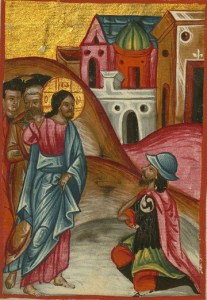
The centurion before Christ
The account of the healing of the centurion’s servant as recording in St. Matthew’s gospel (Mt 8: 5 – 13) is a demonstration of great faith by the gentile Roman. The exchange between Jesus and the centurion occurred as Jesus was entering Capernaum: “A centurion approached him urging him to heal his servant saying, ‘Lord, my servant has been placed in my house paralyzed and is suffering greatly’” (MT 8: 6). Jesus agrees to come to heal the servant. However, the centurion objects and gives his famous response: “Lord, I am not worthy that you should come under the roof of my house, but only say the word and my servant will be healed” (MT 8: 8). Our Lord marveled at this and gives his commentary: “Truly, truly I say to you in no one in Israel have I found such faith!” (Mt 8: 10).
In this gospel passage we have an account of a great demonstration of faith manifested before Christ, his disciples, and the crowd that followed along that day. Such great demonstrations of faith are rare. In fact, Jesus also marveled at lack of faith (Mk 6: 6). Therefore, we dare not have fantasies that we will be able to make such a great demonstration of our personal faith, and have such an outcome as did the centurion. Such an opportunity may come our way, but would we able to respond in a way that would please our Lord? Honestly, we may fail.
Brief Commentaries on St. John Chapter Six, Part Two: Walking on Water
Posted: May 23, 2018 Filed under: The Eucharist and Living the Eucharist | Tags: "I am" in John 6:20, Commentary on John 6: 16 - 21 (Jesus' Walking on Water, Exodus parallel with Jesus walking on water in John 6: 16 - 21, How Jesus' walking on water declares his deity, How Jesus' walking on water relates to the Eucharist, Jesus' words Leave a comment As stated in Part One of this series of postings on the sixth chapter of St. John’s gospel, the entire chapter is to be taken as a whole — every verse relates to all other verses. Looking at the entirety of the chapter, it represents St. John’s teaching about the Eucharist. Hence, the second miracle found in this chapter is part of the whole, and gives meaning to Christ’s words found later in it. This second miracle found in chapter six is St. John’s account of Jesus’ walking on the water of the Sea of Galilee.
Both St. Matthew and St. Mark record the miracle of Jesus walking on the water sequentially following the miracle of the Feeding of the Five Thousand. (However, St. Luke does not follow their chronology.) In his account St. John omits some details found in, for example, St. Mark’s account (Mk 6: 45 -52), but adds others not included in the other gospel recordings. However, the act of Jesus’ walking on water is meant to have common interpretation.
Brief Commentaries on St. John Chapter Six, Part One: The Feeding of the 5,000 (6: 1 – 15)
Posted: April 30, 2018 Filed under: The Eucharist and Living the Eucharist | Tags: 000, 000 and the Eucharist, 000 is a New Testament type of the Eucharist: John chapter six, Feeding of the 5, Jesus Eucharistic actions in St. John's account of the Feeding of the 5, St. John 6: 1 - 15, The 12 baskets full of leftover pieces of bread correspond to the Apostle's care of the Eucharistic Bread, The Eucharist in John 6: 1 -15, The Eucharist in St. John Chapter Six, the Feeding of the 5 1 Comment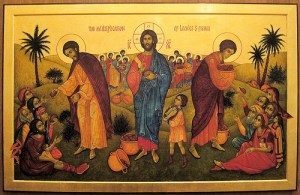 As an introduction, the entirety of the sixth chapter of St. John’s gospel is to be taken as a whole. It is not to be fragmented into isolated parts that have no connection with one another. This can be stated because an inclusio holds the chapter together: the Greek phrase meta tauta (“after these things”) begins the chapter, and the same phrase begins chapter seven of this gospel. This phrase brackets the chapter together. Taken all as one, St. John’s sixth chapter is his teaching about the Eucharist.
The first event recorded by St. John in the sixth chapter is the miracle of the Feeding of the Five Thousand as recorded in verses 1 —15. This miracle is recorded in all four gospels. However, St. John interprets it, and presents it, differently than the accounts found in the three synoptic gospels. He sees this miracle as a New Testament type of the Eucharist.
The Second Sunday of Lent: St. Gregory Palamas and the Healing of the Paralytic
Posted: March 4, 2018 Filed under: Etcetera, The Eucharist and Living the Eucharist | Tags: St. Gregory Palamas, St. Gregory Palamas and the Second Sunday of Lent, The Essence of God and the Energies of God, The Healing of the Paralytic (Mark 2: 1 -12), The Second Sunday of Lent Leave a comment
St. Gregory Palamas
St. Gregory was born in Constantinople in the year 1296. He was born to an aristocratic family. His father was in service to Emperor Andronicus II Paleologos. His father died while Gregory was relatively young, and is then raised by the Emperor. His intelligence and abilities were recognized, and he received the finest education available to him. Though the Emperor hoped Gregory would serve his government, the young man desired to serve Christ instead. His monastic life began when he was about 20 years old on Mt. Athos at the monastery of Vatopedi.
His monastic disciplines grew at various monasteries under a variety of teachers, as did his spirit in Christ. Then, in 1326, he and other brothers escaped Turkish invasion and fled to Thessalonica where he was ordained a priest. After some time, he gathered together a small community near the city. In 1331 he returned to Mt Athos and began to write theological works (he was in his mid-thirties). During this decade all changed for Gregory.
The Sunday of the Publican and the Pharisee
Posted: January 28, 2018 Filed under: The Eucharist and Living the Eucharist | Tags: Jesus' parable of the Publican and the Pharisee in Luke 18: 9 - 14, Prayer of St. Ephraim the Syrian, Preparation of Great Lent, Sunday of the Publican and the Pharisee, The first pre-lenten Sunday, The Jesus Prayer Leave a comment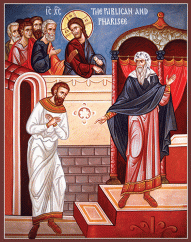 Lent is coming! In preparation for it, the Orthodox Church gradually enters into the season (we don’t dive directly into the deep end!). We prepare with three Sundays whose themes ready our hearts and minds for Lent. The Church’s first pre-Lenten Sunday examines Jesus’ parable about the Publican (or tax collector) and the Pharisee. The gospel text comes from St. Luke 18: 9 – 14:
Now he spoke this parable towards those who consider themselves to be righteous and despise others. “Two men went up to the Temple to pray, one a Pharisee, and the other a tax collector. The Pharisee stood and prayed to himself, ‘O God, I thank you that I am not like the rest of men, extortioners, unjust, adulterers, or like this tax collector. I fast two times a week, and I tithe from all that I acquire.’ But the tax collector stood afar. He did not wish to lift his eyes up to heaven, but he beat his chest saying, ‘Have mercy on me a sinner!’ I say to you, this man went down to his home having been justified rather than the other one, because every one who exalts himself will be humbled, but he who humbles himself will be exalted!”
The Synaxis of the Holy Prophet, Forerunner, and Baptist John
Posted: January 7, 2018 Filed under: The Eucharist and Living the Eucharist | Tags: St. John the Baptist directs us to Christ, St. John the Baptist identifies Christ as the Lamb of God., St. John the Baptist identifies Jesus as the Lamb of God, St. Jonh the Baptist directs us to Christ's presence in the Eucharist., St. Mark 1: 1 - 4 and St. John the Baptist, The intercessions of St. John the Baptist, The ministry of St. John the Baptist Leave a comment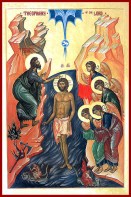 January 6 marks the Feast of Theophany for the Orthodox Church. Theophany commemorates Jesus’ baptism in the Jordan River by St. John the Baptist. The Third Antiphon of the feast proclaims the day’s theology:
When Thou, O Lord, wast baptized in the Jordan, the worship of the Trinity was made manifest! For the voice of the Father bare witness to Thee, and called Thee his beloved Son! And the Spirit, in the form of a dove, confirmed the truthfulness of his word. O Christ our God, who hast revealed Thyself and hast enlightened the world, glory to Thee.

St. John the Baptist
The following day focuses on the holy Prophet, Forerunner, and Baptist John. Such a day is called a Synaxis — the Church gathers together to commemorate the the feast’s “supporting actor(s). In his gospel, St. Mark writes of St. John’s purpose and ministry:
Behold, I will send my messenger before your face, who shall prepare your way: a voice crying in the wilderness, “Make ready the way of the Lord, make straight his paths.” John was baptizing in the wilderness and proclaiming a baptism of repentance for the forgiveness of sins (Mark: 1 – 4).
Recapitulation in the “Here and Now”
Posted: November 29, 2017 Filed under: The Eucharist and Living the Eucharist | Tags: All things are gathered together in Christ: Recapitulation, and unity in the parish is a manifestation of Reconciliation, Eph 1: 9 - 10 defines Recapitulation, Eph 4: 1 - 6 demand for peace and unity, Jesus' High Priestly Prayer and the demand for unity an love, love, Peace, Recapitulation manifested in Ephesus Leave a comment
Ephesian ruin
Within the salvific model of Christus Victor there is the wonderful aspect of recapitulation. I have written several postings about Recapitulation and refer to it frequently. We have a New Testament declaration of this subject. It is found in St. Paul’s epistle to the Ephesians:
Having declared to us the mystery of his will, according to his good pleasure which he intended for him [Christ], for the purpose of the fulness of time: to gather together all things in Christ, those things in the heavens, and those things on earth (Eph 1: 9 – 10).
St. Paul is declaring that all that was lost and scattered into the exile of sin, death, darkness, and alienation by Adam’s disobedience and capitulation has been gathered together into relationship, light, life, and holiness in Christ. All that is of creation — all that is imaginable — from the smallest subatomic particle to the most bizarre, remote and distant extraterrestrial thing is gathered together, and contained within, the God-man, Jesus Christ: this is Recapitulation. St. Paul writes again of Recapitulation in his epistle to the Colossians:
He is before all things, and in him [Christ] all things stand in proper order…Because in him [Christ] all the fulness [pan to pleroma] was pleased to dwell. And through him to reconcile all things to him, making peace through the blood of his cross, whether those things upon the earth, or those things in the heavens (Col 1: 17, 19 – 20).
A New Creation, Recapitulation, and Lazarus
Posted: November 4, 2017 Filed under: The Eucharist and Living the Eucharist | Tags: Being a new creation in Christ, Depart in peace to draw all things to Christ, Luke 16: 19 -31, Practicing Recapitulation in our lives, Serving the Lazarus in our lives, the Rich Man and Lazarus Leave a comment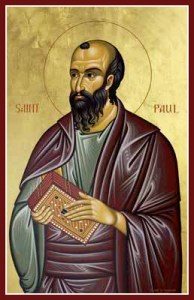 November 5, 2017 marks the 22nd Sunday after Pentecost. This Sunday I have the blessing and joy to serve Christ the Savior Orthodox Church in Spokane, Washington. This wonderful parish is pastored by Fr. Andrew Welzig, who was away to California to attend a wedding. The epistle reading comes from Galatians 6: 11 – 18. I emphasize two verses,
May it not be for me to boast except in the cross of our Lord Jesus Christ through which the world was crucified to me and I to the world. For neither is circumcision anything, nor is uncircumsion, but only a new creation (Gal 6: 14 – 15).
St. Paul is dead to the world system, and the world system is dead to him. He knows of a new reality, a new existence, and he knows of a new creation. He knows of a new life of which is has life — life in Christ, and Christ alive in him. We read from Galatians 2: 20, “I was co-crucified with Christ: I no longer live, but Christ lives in me.” St. Paul’s natural life is no more. He is a new man, a new creature, who now is alive to Christ who imparts his life to him, and exists within him.
“The Only Living Boy in New York” — Here I Am
Posted: October 21, 2017 Filed under: Music and Guitars, The Eucharist and Living the Eucharist | Tags: "Here I am", "Let us attend!", Being present in the moment, Isaiah 6: 5 - 8, Simon and Garfunkel's "Only Living Boy in New York Leave a comment
Paul Simon and Art Garfunkel
“The Only Living Boy in New York” is my favorite song by Simon and Garfunkel. It was one of their final songs as a duo being recorded in late 1969. Its origin comes from Art Garfunkel’s departure from New York to Mexico to film “Catch 22” (“Tom, get your plane ride on time / I know your part’ll go fine / Fly down to Mexico…”). It is a great acoustic guitar song, with wonderful melody and lush vocals. The song’s bridge in its final presentation is fantastic fun to play, but it’s the lyrics of the bridge that win my attention:
“Half of the time we’re gone / But we don’t know where / And we don’t know where.”
Henry Walpole: English Martyr and Saint, and Model for Our Day
Posted: October 17, 2017 Filed under: Etcetera, The Eucharist and Living the Eucharist | Tags: Carved relics in the Tower of London, Contemporary persecution of western Christians by secular societies, persecution of American Christians, Pray for your Enemies, Salt Tower of the Tower of London, Solidarity with contemporary culture, St. Henry Walpole and the Tower of London, St. Henry Walpole Martyr and Saint, The 40 Martyrs of England and Wales, Tower of London and Henry Walpole Leave a comment The Tower of London. It has quite a name. It is quite a place. From it you see the London Bridge and the Thames and a great deal of modern, bustling London. Today it is a UNESCO World Heritage Site and a tourist destination. However, its name for most denotes imprisonment, pain, and death. That was not its initial purpose. It was built to show the wealth and power of William the Conquerer. In actuality, few met their deaths within its walls, but it did serve as a prison and a very dark place for many. Among those imprisoned and tortured in the Tower was St. Henry Walpole.
The Raising of the Son of the Widow of Nain: Life Intersects Death
Posted: October 7, 2017 Filed under: The Eucharist and Living the Eucharist | Tags: "Touching the bier" serving Christ daily in our lives, and serve Christ in our daily lives., consent and denial - choosing life or death by our actions, Processing in life as Christ, Raising of the son of the widow of Nain, The Eucharist empowers us to live as Leave a commentIn the gospel reading for the 18th Sunday after Pentecost, we read of the raising of the only son of a widow in a town called Nain. It is interesting to note that we read of two processing groups of people. These processions contrast greatly.
 The first procession is led by and centers around Jesus — he, his disciples, and a great crowd are moving to Nain. This procession is a procession of life and light. The second and contrasting procession is led by those bearing the dead body of the only son of a widow. This procession is one of death: they are bearing this young man to his grave. His mother, a widow, faces a “death of destitution” now that she has no support in life. The widow who conceived her son in the hidden, dark stillness of her womb now delivers him to the hidden, dark stillness of his tomb. (That tomb, though, will serve as a second “womb” in another day when he dies again. From this “womb” he will emerge in the new, eternal life of the resurrection.)
Chistus Victor – A Primer (Part Three)
Posted: August 6, 2017 Filed under: Etcetera, The Eucharist and Living the Eucharist | Tags: The aspect of recapitulation within the salvation model of Christus Victor, The theological model of recapitulation explained concisely Leave a commentRECAPITULATION
 Within the salvific model of Christus Victor there is the wonderful concept, or better, aspect of recapitulation. Since this posting is part three of a primer of Christus Victor, let me move immediately to the New Testament, specifically St. Paul’s epistle to the Ephesians:
Having declared to us the mystery of his will, according to his good pleasure which he intended for him [Christ], for the purpose of the fulness of time: to gather together all things [anakephalaiosasthai ta panta] in Christ, those things in the heavens, and those things on earth (Eph 1: 9 – 10).
Christus Victor — A Primer (Part Two)
Posted: July 30, 2017 Filed under: The Eucharist and Living the Eucharist | Tags: Christ as the New Adam reverses the disobedience and capitulation of Adam, Christus Victor as model of atonement, Gabriel's appearance in the Annunciation reverses the deceit of the serpent, Jesus is the New Adam, Mary as New Eve, Mary's obedience undoes Eve's disobedience, Primer for Christus Victor model of salvation Leave a commentA REVERSAL OF MISFORTUNES (STEP BY STEP)

Icon of the Annunciation
STEP ONE: We must have a different spiritual being who approaches the woman — one who is holy and truthful. The following New Testament passages come from St. Luke’s Gospel:
And in the sixth month the angel Gabriel was sent by God to a city of Galilee by the name of Nazareth towards a virgin having been betrothed to a man by the name of Joseph from the House of David, and the name of the virgin was Mary. And upon approaching her he said, “Greetings, one-having-been-graced, the Lord is with you (Luke 1: 26 – 28).
Gabriel, unlike the serpent of old, does not deceive. He clearly declares his message:
And the angel said to her, “Fear not, Mary, for you have found favor with God. And behold, for you shall conceive, and the Son born of you will name Jesus. He shall be great and be called the Son of the Most High and the Lord God shall give to him the throne of his father David. And he shall rule over the House of David forever and his Kingdom shall not end (Luke 1: 30 – 33).
 Father Irenaeus Williams
Brief Commentaries on St. John Chapter Six, Part Three: A Misused Objection is Countered
Posted: September 6, 2018 | Author: Fr. Irenaeus | Filed under: The Eucharist and Living the Eucharist | Tags: Chiasm explained as scriptural tool for writing, Commentary on John 6: 63, Demand for spiritual life to understand Jesus' difficult teaching, Evangelicals' misuse of John 6: 63, Nicodemus and Jesus in John chapter three, the Eucharist is the Body and Blood of Christ, the purpose of the Prologue of St. John's gospel | Leave a commentChrist the Bread of Life
This third part of my commentary on St. John chapter six may seem out of sequence — I should be writing about Christ’s “Bread of Life Discourse” which begins with St. John 6:25. However, I have put things in this order to counter an objection made by evangelicals and others who employ a single verse in their attempt to negate Christ’s own teaching about the Eucharist — that his Body and Blood are real food and drink to be consumed for eternal life and union that is to exist with him and the believer. The verse which they employ is St. John 6: 63, “It is the Spirit which brings life, the flesh counts for nothing: the words which I have spoken to you are spirit and are life.” This verse is used by evangelicals, and other Protestants, to state that Jesus did not mean what he said, he was just speaking symbolically, and we do not really consume his Body and Blood in the Eucharist. It is a very weak argument, but much confidence is falsely placed in its usage. Examination of the context of this verse with the whole of St. John’s gospel reveals the exact opposite: those who reject this teaching have only carnal understanding and cannot understand the ways of the spiritual life of faith in Christ.
Read the rest of this entry »