Posted: September 26, 2026 | Author: Fr. Irenaeus | Filed under: Etcetera, The Eucharist and Living the Eucharist | Tags: being fruitful in and by abiding in Christ, Jesus if the Vine and we are branches (St John 15: 1-10), living the Eucharist by be self-giving and other-receiving, St John Chrysostom's 78th Homily on St Matthew's Gospel, St John Chrysostom's commentary on the Parable of the Talents, St Matthew 25: 14 - 30, the necessity of producing spiritual fruit, The Parable of the Talents |
 The Parable of the Talents is found in the 25th chapter of St Matthew’s Gospel. In this parable we find the master of the estate and three servants. The master plans to go on a long, extended journey. Before his departure he gave talents (a significant sum of money) to his three servants. His purpose was to receive return on his money. To the first servant he gave five talents. To the second servant he gave two talents. Then, finally, the third servant received one talent. The number of talents entrusted to the servants varied according to the master’s knowledge of their abilities.
After a long time, the master returned to settle accounts with them (St Matthew 25: 19). The first and second servants doubled the amount entrusted to them. They were praised for their efforts, and are rewarded with much more:
“Well done, good and faithful servant, you have been faithful over a little, I will set you over much; enter into the joy of your master” (St Matthew 25: 21,23).
But the third servant hid the one talent given him because,
“…I knew you to be a hard man, reaping where you did not sow, and gathering where you did not winnow; so I was afraid and hid your talent in the ground. Here, you have what is yours” (St Matthew 25: 24-25).
This third servant did not perform to expectation. There was no gain, not even from interest earned in a bank (St Matthew 25: 27). His one talent was taken from him and given to the servant who had gained ten talents.
We read this:
For to everyone who has will more be given, and he will have abundance; but from him who has not, even what he has will be taken away. And cast the worthless servant into the outer darkness, where there will be weeping and gnashing of teeth (St Matthew 25: 29-30).
In our days, where many expect equity in outcome for all (which is an unrealistic and naive expectation), this seems grossly unfair and completely unjust. But, in his 78th homily on St Matthew, St John Chrysostom gives us this to ponder:
See how not only the spoiler and the covetous, nor only the doer of evil deeds is punished, but also he that does no good thing, is punished with extreme punishment.
Our salvation is a free gift from God. It is given to us out of God’s mercy and love for us: “For God so loved the world that he gave his Only-begotten Son, that whoever believes in him should have eternal life” (St John 3: 16). But, in agreement with St John Chrysostom, we can’t keep this free gift on the shelf where it collects dust. Faith and belief are not just mental activities: There is to be a “doing” of our faith, and action from our belief is demanded. St Paul has written these words:
Therefore, my beloved, as you have always obeyed, so now, not only as in my presence but much more in my absence, work out you own salvation with fear and trembling; for God is at work [energon] in you, both to will and to work [energein] for his good pleasure (Philippians 2: 12-13).
St Paul uses the verb energien — meaning the very energies of God, his divine presence and grace — are working together with us as we “work out our own salvation with fear and trembling.” And, as with the master of the parable, the fruits of our salvation are for his, i.e., God’s, good pleasure.
How are we to work out our own salvation? I offer just two examples. We are to put into practice the Beatitudes, not just memorizing the verses, not just meditating on them, but doing the Beatitudes. For example, “blessed are the merciful, because they shall receive mercy.” Therefore, we must determine in advance to be merciful in all are decisions and our actions among people (see St Matthew 5: 1-12 for all of them). We are also to develop the fruits of the spirit as we mature in Christ:
But the fruit of the Spirit is love, joy, peace, patience, kindness, goodness, faithfulness, gentleness, self-control; against such there is no law. And those who belong to Christ Jesus have crucified the flesh with its passions and desires. If we live by the Spirit, let us also walk by the Spirit. Let us have no self-conceit, no provoking of one another, no envy of one another (Galatians 5: 22- 25).
 To add to our understanding for the need for spiritually fruitful lives, Jesus also gives to us the image of the vine:
“I am the true vine, and my Father is the vinedresser. Every branch of mine that bears no fruit, he takes away, and every branch that does he prunes, that it may bear more fruit. You are already made clean by the word which I have spoken to you. Abide in me, and I in you. As the branch cannot bear fruit by itself, unless it abides in the vine, neither can you, unless you abide in me. I am the vine, you are the branches. He who abides in me, and I in him, he it is that bears much fruit, for apart from me you can do nothing. I a man does not abide in me, he is cast forth as a branch and withers; and the branches are gathered, thrown into the fire and burned” (St John 15: 1-6).
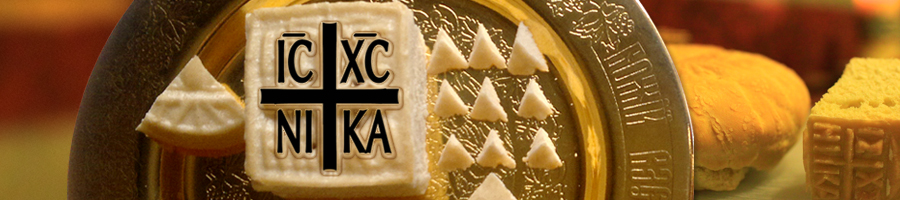
 We abide in Christ by faithfully living by his commands, and by doing his words — what he tells to do. While we are in Christ — even if we have only one talent — we will produce fruit. We abide in Christ also by receiving the Body and Blood of our Lord as given to us in the Eucharist. We read Jesus’ own words:
“For my flesh is food indeed, and my blood is drink in deed. He who is eating my flesh and is drinking my blood abides in me, and I in him” (St John 6: 55-56).
We can always look to the Eucharist to inform the actions and works by which we work out our salvation. I give one example. We are to be self-giving, just as Christ gives himself anew to us, and we are to be other-receiving just as Christ receives us to himself again as we come to receive his Body and Blood. We will be fruitful by giving ourselves to others, receiving others to ourselves for the benefit of the other person.
St John Chrysostom also has given us this information in the 78th homily. He gets the last word:
Let us hearken then to these words. As we have opportunity, let us help on our salvation, let us get oil for our lamps, let us labor to add to our talent. For if we should be backward, and spend our time in sloth here, no one will pity us any more hereafter, though we should wail ten thousand times. He also that had on the filthy garments condemned himself, and profited nothing. He also that had the one talent restored that which was committed to the charge, and yet was condemned. The [five foolish] virgins again entreated, and came unto him and knocked, and all in vain, and without effect.
Knowing then these things, let us contribute alike wealth, and diligence, and protection, and all things for our neighbor’s advantage. For the talents here are each person’s ability, whether in the way of protection, on in money, or in teaching, or in what thing soever of the kind. Let no man say, I have but one talent, and can do nothing; for you can even with one [talent] approve yourself.
For this end God gave us speech, and hands, and feet, and strength of body, and mind, and understanding, that we might us all these things, both for our own salvation, and for our neighbor’s advantage.
In Christ,
Fr Irenaeus


Five, Two, and One: the Parable of the Talents
Posted: September 26, 2026 | Author: Fr. Irenaeus | Filed under: Etcetera, The Eucharist and Living the Eucharist | Tags: being fruitful in and by abiding in Christ, Jesus if the Vine and we are branches (St John 15: 1-10), living the Eucharist by be self-giving and other-receiving, St John Chrysostom's 78th Homily on St Matthew's Gospel, St John Chrysostom's commentary on the Parable of the Talents, St Matthew 25: 14 - 30, the necessity of producing spiritual fruit, The Parable of the Talents | Leave a commentAfter a long time, the master returned to settle accounts with them (St Matthew 25: 19). The first and second servants doubled the amount entrusted to them. They were praised for their efforts, and are rewarded with much more:
But the third servant hid the one talent given him because,
This third servant did not perform to expectation. There was no gain, not even from interest earned in a bank (St Matthew 25: 27). His one talent was taken from him and given to the servant who had gained ten talents.
We read this:
In our days, where many expect equity in outcome for all (which is an unrealistic and naive expectation), this seems grossly unfair and completely unjust. But, in his 78th homily on St Matthew, St John Chrysostom gives us this to ponder:
Our salvation is a free gift from God. It is given to us out of God’s mercy and love for us: “For God so loved the world that he gave his Only-begotten Son, that whoever believes in him should have eternal life” (St John 3: 16). But, in agreement with St John Chrysostom, we can’t keep this free gift on the shelf where it collects dust. Faith and belief are not just mental activities: There is to be a “doing” of our faith, and action from our belief is demanded. St Paul has written these words:
St Paul uses the verb energien — meaning the very energies of God, his divine presence and grace — are working together with us as we “work out our own salvation with fear and trembling.” And, as with the master of the parable, the fruits of our salvation are for his, i.e., God’s, good pleasure.
How are we to work out our own salvation? I offer just two examples. We are to put into practice the Beatitudes, not just memorizing the verses, not just meditating on them, but doing the Beatitudes. For example, “blessed are the merciful, because they shall receive mercy.” Therefore, we must determine in advance to be merciful in all are decisions and our actions among people (see St Matthew 5: 1-12 for all of them). We are also to develop the fruits of the spirit as we mature in Christ:
We can always look to the Eucharist to inform the actions and works by which we work out our salvation. I give one example. We are to be self-giving, just as Christ gives himself anew to us, and we are to be other-receiving just as Christ receives us to himself again as we come to receive his Body and Blood. We will be fruitful by giving ourselves to others, receiving others to ourselves for the benefit of the other person.
St John Chrysostom also has given us this information in the 78th homily. He gets the last word:
In Christ,
Fr Irenaeus