The First Ecumenical Council and Contending for the Faith
Posted: May 25, 2026 Filed under: Etcetera | Tags: 1 John 1: 1 - 4, 1 John 4: 1-3, Arius was an antichrist, Christology of the Apostolic Faith, Muhammad is an antichrist, St John 17: 17-21, St John 17: 9-13, St John's definition of antichrist, St Jude 1-4 and contending for the Faith, The First Ecumenical Council, The Nicene Creed Leave a commentThe First Ecumenical Council occurred in Nicaea in the year 325. The bishops gathered to make determinations about the teachings of the Alexandrian bishop Arius. He taught that Jesus was a created being, not God in human flesh. Arius was more influenced by the philosophies of antiquity than by the Scriptures. At the conclusion of the Council his teachings were refuted, and the Nicene Creed was written and published.
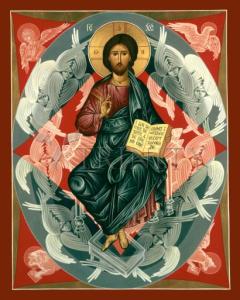 The Gospel reading for the commemoration of those assembled comes from the 17th chapter of St John’s Gospel. In the verses set forth for reading, Jesus prays for his Apostles in the hours before his crucifixion. The quote below is from the second half of the reading:
I am praying for them; I am not praying for the world but for those whom you have given me, for they are yours; all that are mine are yours, and yours are mine, and I have been glorified in them. And now I am no longer in the world, but they are in the world, and I am coming to you, Holy Father. Keep them in your Name, those whom you have given to me, so that might be one even as we are One. While I was with them, I kept and guarded those you gave to me by your Name, and not one of them was lost except the son of perdition, so that the Scripture might be fulfilled. But now I am coming to you; these things I speak in the world, are so that they might have my joy fulfilled in themselves (St John 17: 9–13).
The faithful Apostles gathered around continued to be kept and guarded by Jesus. As we know, they remained faithful to Christ as they proclaimed the Gospel throughout the world available to them in their days.
Then, Jesus’ prayers continue for them:
Sanctify them in your truth; your word is truth. As you sent me into the world, so I have sent them into the world. And for their sake I consecrate myself, that they also may be consecrated in truth (St John 17: 17-19).
Later, of course, Sts Mathias and Paul were added to their ranks, and, in addition, the Seventy. By their works and words the Apostolic Office and Faith began.
In these next verses the subjects of Jesus’ prayers shift in concern for others beyond the cohort of the Apostles:
I do not pray for these only, but also for those who believe in me through their word, that they may all be one; even as we are one; even as you, Father, are in me, and I in you, that they also may be in us, so that the world may believe that you have sent me (St John 17: 20-21).
Among countless others, St Ignatius of Antioch and St Irenaeus of Lyon continued to spread and defend that Apostolic Faith.
In his first epistle, St John the Apostle, Evangelist, and Theologian writes to those who have come to faith in Christ through his teaching. St John also establishes the source of the authority of the Apostolic Office: They had first-hand experience of the Word made flesh.
That which was from the beginning, whom we have heard, whom we have seen with our eyes, whom we observed and our hands have touched concerning the Word of Life. And the Life was manifested, and we have seen and testify and declare to you the Eternal Life which was with the Father and was manifested to us. That which we have seen and have heard, we declare also to you so that you also might have fellowship with us. And our fellowship is with the Father and with his Son Jesus Christ. And we write these things so that our joy might be fulfilled (1 John 1: 1-4).
He writes this because threats to the Faith appeared as heresies erupted in his day. Those heresies he battled put forward false Christologies which were in direct opposition of the Apostles understanding of the nature of the Person of Jesus Christ. The Apostles were the only ones who could make such determinations, after all, they heard, saw, observed, and touched Jesus Christ. His warnings are made clear by bold words:
Little children, it is the last hour, and just as you heard that antichrist comes, even now many antichrists have become present, by this we know that it is the last hour…who is the liar except the one who denies that Jesus is the Christ; this is the antichrist, the one who
denies the Father and the Son (1 St John 2: 18, 21).
St John gives more clarity:
Beloved, do not believe every spirit, but test the spirits if they are from God, because many false prophets have come out into the world. By this you know the spirit of God: Every spirit that confesses that Jesus Christ has come in the flesh is from God. And every spirit that does not confess Jesus is not from God. And this is the spirit of the antichrist which you heard comes and is already now in the world (1 St John 4: 1-3).
You are from God, little children, and you have overcome them, because greater is he who is in you than he who is in the world. They are from the world. Because of this they speak from the world and the world hears them. We are from God. He who knows God hears us. The one who is not of God does not hear us. By this we know the spirit of truth and the spirt of deception (1 St John 4: 4-6).
Antichrist. Arius was an antichrist: he denied and taught that Jesus Christ was not God who took on flesh, bone, and blood. Added to this he denied that the Father and the Son are one (ἐγὼ καὶ ὁ πατὴρ ἕν ἐσμεν, I and the Father are one. St John 10:30). How could he not understand St John’s message?
In the beginning was the Word, and the Word was with God, and the Word was God. This one was with God in the beginning.
And the Word became flesh and tabernacled among us, and we observed his glory, glory as the Only Begotten of the Father, full of grace and truth.
Arius’ heresy swept through his empire and brought great confusion and division. For this reason St Constantine called together the First Ecumenical Council. We have from it the defining Christology of the One, Holy, and Apostolic Faith:
I believe in one God the Father Almighty creator of heaven and earth, of all things seen and unseen. And in one Lord Jesus Christ, the Only-begotten Son of God, begotten of the Father before all ages; Light of Light, true God of true God, begotten not created, of one essence (ὁμοούσιον) with the Father through whom all things were made. Who for us men and for our salvation came down from heaven and was incarnate of the Holy Spirit and the Virgin Mary and became man. He was crucified for us under Pontius Pilate, and suffered and was buried; And he rose one the third day according to the Scriptures. He ascended into heaven and is seated at the right hand of the Father. And he will come again to judge the living and the dead, and his Kingdom shall have no end.
Here is a kontakion (hymn) that honors their faith and work:
The Apostles’ preaching and the Fathers’ doctrines have established one faith for the Church. Adorned with the robe of truth, woven from heavenly theology, it defines and glorifies the great mystery of Orthodoxy.
We are all to hold and defend this – not just the bishops, and the clergy, but every Orthodox Christian. We all must know well the Scriptures and the Faith. We all must defend and guard it. We must all pass it on to the next generations. Concerning this sacred task, St Jude gave us these words:
Jude, a servant of Jesus Christ and brother of James, to those who are called, beloved in God the Father and kept for Jesus Christ: May mercy, peace, and love be multiplied to you. Beloved, being very eager to write to you of our common salvation, I found it necessary to write appealing to you to contend for the faith which was once for all delivered to the saints. For admission has been secretly gained by some who long ago were designated for this condemnation, ungodly persons who pervert the grace of our God into licentiousness and deny our only Master and Lord, Jesus Christ (St Jude 1-4).
We are to contend for the faith because there are many antichrists among us today. Though their ranks are many, I put forward that primary among them is Islam. In the Qur’an Jesus (Isa in Arabic) is acknowledged, but only as a prophet who came before Muhammad, and it states that Jesus was a Muslim. Islam denies that Jesus died for the sins of the world, and they despise the Cross. The Qur’an denies who Jesus is as we find in the following,
Had Allah wished to take to himself a son, he could have chosen whom he pleased out of those whom he does create: but glory he to him. He is Allah, the one, the irresistible (Qur’an 39: 4).
Say: He is Allah, the one and only; Allah, the eternal, absolute; he begets not, nor is he begotten; and there is none like unto him (Qur’an 112: 1 – 4).

Light and Life
Upon testing this spirit, the Qur’an is to be rejected. The words of the Qur’an deny the deity of the Son of God – it denies the union of the Father and the Son. Therefore, Islam denies that Jesus Christ has come in the flesh. If he ever existed as the Hadith collections claim, Muhammad was a false prophet and an antichrist. Additionally, Allah is a false god and a slave master to whom one is to submit, or else. In stark contrast our true God has established a familial relationship with us: he is our loving Father, and we are his children.
I return to the words of St Jude:
But you, beloved, build yourselves up on your most holy faith; pray in the Holy Spirit; keep yourselves in the love of God; wait for the mercy of our Lord Jesus Christ unto eternal life. And convince some who doubt; save some by snatching them out of the fire; on some have mercy with fear, hating even the garment spotted by the flesh. Now to him who is able to keep you from falling and to present you without blemish before the presence of his glory with rejoicing, to the only God, our Savior through Jesus Christ our Lord, be glory, majesty, dominion, and authority, before all time and now and forever. Amen (St Jude 20-25).
I conclude with another hymn honoring the Fathers of the First Ecumenical Council:
You are most glorious, O Christ our God! You have established the holy Fathers as lights on the earth! Though them you have guided us to the true faith! O greatly Compassionate One, glory to you!
In Christ, who is coeternal with the Father, and the Holy Spirit, and who was made flesh for our salvation,
Fr Irenaeus

