The First Ecumenical Council and Contending for the Faith
Posted: May 25, 2026 Filed under: Etcetera | Tags: 1 John 1: 1 - 4, 1 John 4: 1-3, Arius was an antichrist, Christology of the Apostolic Faith, Muhammad is an antichrist, St John 17: 17-21, St John 17: 9-13, St John's definition of antichrist, St Jude 1-4 and contending for the Faith, The First Ecumenical Council, The Nicene Creed Leave a commentThe First Ecumenical Council occurred in Nicaea in the year 325. The bishops gathered to make determinations about the teachings of the Alexandrian bishop Arius. He taught that Jesus was a created being, not God in human flesh. Arius was more influenced by the philosophies of antiquity than by the Scriptures. At the conclusion of the Council his teachings were refuted, and the Nicene Creed was written and published.
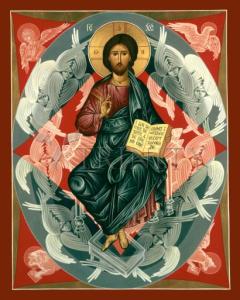 The Gospel reading for the commemoration of those assembled comes from the 17th chapter of St John’s Gospel. In the verses set forth for reading, Jesus prays for his Apostles in the hours before his crucifixion. The quote below is from the second half of the reading:
I am praying for them; I am not praying for the world but for those whom you have given me, for they are yours; all that are mine are yours, and yours are mine, and I have been glorified in them. And now I am no longer in the world, but they are in the world, and I am coming to you, Holy Father. Keep them in your Name, those whom you have given to me, so that might be one even as we are One. While I was with them, I kept and guarded those you gave to me by your Name, and not one of them was lost except the son of perdition, so that the Scripture might be fulfilled. But now I am coming to you; these things I speak in the world, are so that they might have my joy fulfilled in themselves (St John 17: 9–13).
The faithful Apostles gathered around continued to be kept and guarded by Jesus. As we know, they remained faithful to Christ as they proclaimed the Gospel throughout the world available to them in their days.
Then, Jesus’ prayers continue for them:
Sanctify them in your truth; your word is truth. As you sent me into the world, so I have sent them into the world. And for their sake I consecrate myself, that they also may be consecrated in truth (St John 17: 17-19).
Later, of course, Sts Mathias and Paul were added to their ranks, and, in addition, the Seventy. By their works and words the Apostolic Office and Faith began.
In these next verses the subjects of Jesus’ prayers shift in concern for others beyond the cohort of the Apostles:
I do not pray for these only, but also for those who believe in me through their word, that they may all be one; even as we are one; even as you, Father, are in me, and I in you, that they also may be in us, so that the world may believe that you have sent me (St John 17: 20-21).
Among countless others, St Ignatius of Antioch and St Irenaeus of Lyon continued to spread and defend that Apostolic Faith.
In his first epistle, St John the Apostle, Evangelist, and Theologian writes to those who have come to faith in Christ through his teaching. St John also establishes the source of the authority of the Apostolic Office: They had first-hand experience of the Word made flesh.
That which was from the beginning, whom we have heard, whom we have seen with our eyes, whom we observed and our hands have touched concerning the Word of Life. And the Life was manifested, and we have seen and testify and declare to you the Eternal Life which was with the Father and was manifested to us. That which we have seen and have heard, we declare also to you so that you also might have fellowship with us. And our fellowship is with the Father and with his Son Jesus Christ. And we write these things so that our joy might be fulfilled (1 John 1: 1-4).
He writes this because threats to the Faith appeared as heresies erupted in his day. Those heresies he battled put forward false Christologies which were in direct opposition of the Apostles understanding of the nature of the Person of Jesus Christ. The Apostles were the only ones who could make such determinations, after all, they heard, saw, observed, and touched Jesus Christ. His warnings are made clear by bold words:
Little children, it is the last hour, and just as you heard that antichrist comes, even now many antichrists have become present, by this we know that it is the last hour…who is the liar except the one who denies that Jesus is the Christ; this is the antichrist, the one who
denies the Father and the Son (1 St John 2: 18, 21).
St John gives more clarity:
Beloved, do not believe every spirit, but test the spirits if they are from God, because many false prophets have come out into the world. By this you know the spirit of God: Every spirit that confesses that Jesus Christ has come in the flesh is from God. And every spirit that does not confess Jesus is not from God. And this is the spirit of the antichrist which you heard comes and is already now in the world (1 St John 4: 1-3).
You are from God, little children, and you have overcome them, because greater is he who is in you than he who is in the world. They are from the world. Because of this they speak from the world and the world hears them. We are from God. He who knows God hears us. The one who is not of God does not hear us. By this we know the spirit of truth and the spirt of deception (1 St John 4: 4-6).
Antichrist. Arius was an antichrist: he denied and taught that Jesus Christ was not God who took on flesh, bone, and blood. Added to this he denied that the Father and the Son are one (ἐγὼ καὶ ὁ πατὴρ ἕν ἐσμεν, I and the Father are one. St John 10:30). How could he not understand St John’s message?
In the beginning was the Word, and the Word was with God, and the Word was God. This one was with God in the beginning.
And the Word became flesh and tabernacled among us, and we observed his glory, glory as the Only Begotten of the Father, full of grace and truth.
Arius’ heresy swept through his empire and brought great confusion and division. For this reason St Constantine called together the First Ecumenical Council. We have from it the defining Christology of the One, Holy, and Apostolic Faith:
I believe in one God the Father Almighty creator of heaven and earth, of all things seen and unseen. And in one Lord Jesus Christ, the Only-begotten Son of God, begotten of the Father before all ages; Light of Light, true God of true God, begotten not created, of one essence (ὁμοούσιον) with the Father through whom all things were made. Who for us men and for our salvation came down from heaven and was incarnate of the Holy Spirit and the Virgin Mary and became man. He was crucified for us under Pontius Pilate, and suffered and was buried; And he rose one the third day according to the Scriptures. He ascended into heaven and is seated at the right hand of the Father. And he will come again to judge the living and the dead, and his Kingdom shall have no end.
Here is a kontakion (hymn) that honors their faith and work:
The Apostles’ preaching and the Fathers’ doctrines have established one faith for the Church. Adorned with the robe of truth, woven from heavenly theology, it defines and glorifies the great mystery of Orthodoxy.
We are all to hold and defend this – not just the bishops, and the clergy, but every Orthodox Christian. We all must know well the Scriptures and the Faith. We all must defend and guard it. We must all pass it on to the next generations. Concerning this sacred task, St Jude gave us these words:
Jude, a servant of Jesus Christ and brother of James, to those who are called, beloved in God the Father and kept for Jesus Christ: May mercy, peace, and love be multiplied to you. Beloved, being very eager to write to you of our common salvation, I found it necessary to write appealing to you to contend for the faith which was once for all delivered to the saints. For admission has been secretly gained by some who long ago were designated for this condemnation, ungodly persons who pervert the grace of our God into licentiousness and deny our only Master and Lord, Jesus Christ (St Jude 1-4).
We are to contend for the faith because there are many antichrists among us today. Though their ranks are many, I put forward that primary among them is Islam. In the Qur’an Jesus (Isa in Arabic) is acknowledged, but only as a prophet who came before Muhammad, and it states that Jesus was a Muslim. Islam denies that Jesus died for the sins of the world, and they despise the Cross. The Qur’an denies who Jesus is as we find in the following,
Had Allah wished to take to himself a son, he could have chosen whom he pleased out of those whom he does create: but glory he to him. He is Allah, the one, the irresistible (Qur’an 39: 4).
Say: He is Allah, the one and only; Allah, the eternal, absolute; he begets not, nor is he begotten; and there is none like unto him (Qur’an 112: 1 – 4).

Light and Life
Upon testing this spirit, the Qur’an is to be rejected. The words of the Qur’an deny the deity of the Son of God – it denies the union of the Father and the Son. Therefore, Islam denies that Jesus Christ has come in the flesh. If he ever existed as the Hadith collections claim, Muhammad was a false prophet and an antichrist. Additionally, Allah is a false god and a slave master to whom one is to submit, or else. In stark contrast our true God has established a familial relationship with us: he is our loving Father, and we are his children.
I return to the words of St Jude:
But you, beloved, build yourselves up on your most holy faith; pray in the Holy Spirit; keep yourselves in the love of God; wait for the mercy of our Lord Jesus Christ unto eternal life. And convince some who doubt; save some by snatching them out of the fire; on some have mercy with fear, hating even the garment spotted by the flesh. Now to him who is able to keep you from falling and to present you without blemish before the presence of his glory with rejoicing, to the only God, our Savior through Jesus Christ our Lord, be glory, majesty, dominion, and authority, before all time and now and forever. Amen (St Jude 20-25).
I conclude with another hymn honoring the Fathers of the First Ecumenical Council:
You are most glorious, O Christ our God! You have established the holy Fathers as lights on the earth! Though them you have guided us to the true faith! O greatly Compassionate One, glory to you!
In Christ, who is coeternal with the Father, and the Holy Spirit, and who was made flesh for our salvation,
Fr Irenaeus
Contending for the Faith
Posted: June 3, 2025 Filed under: Etcetera | Tags: 1 John 1: 1 - 4, 1 John 2: 22 - 24, Acts 20: 28 -32, alchemy, ancient heresies, biological alchemy, definition of antichrist, immutability of sex, Jesus' High Priestly Prayer, Jude 3 - 5, Rev 2: 2- 5, sexual identity, St John 17: 1 - 13, St John 1: 1, Synod of the Bishops of the Orthodox Church in America, The Church of Ephesus, The Council of Nicea I, The First Ecumenical Council Leave a commentCONTENDING FOR THE FAITH
 The seventeenth chapter of St John’s Gospel contains what is commonly called the High Priestly Prayer of Jesus. Its themes contain the prayers of the priest who is about to offer a sacrifice to God. Such prayers contain four elements: glorification, remembrance of God’s saving works, intercession for those for whom the sacrifice is made, and then declaring the sacrifice itself. In this chapter it is, of course, Jesus himself who is both the High Priest and the Offering. (It is interesting to note that these same elements of priestly prayer are found the the Anaphora — the prayers that precede the bloodless sacrifice of praise — of the Eucharist.)
The Seventh Sunday of Pascha commemorates the First Ecumenical Council which dealt with the Arian Heresy in the fourth century. The Gospel reading for the day comes from St John 17: 1 – 13, and in these verses he prays for the Apostles:
I have manifested your name to the men whom you gave me out of the world; they were yours, and you gave them to me, and they have kept your word. Now they know that everything that you have given me is from you; for I have given them the words which you gave me, and they have received them and know in truth that I came from you; and they have believed that you sent me…And now I am no more in the world, but they are in the world, and I am coming to you. Holy Father, keep them in your name, which you have given me, that they may be one, even as we are one (St John 17: 6 – 8, 11).
The Apostles are those chosen by Jesus, and who have heard and have kept Jesus’ words, and witnessed his Resurrection. Though not present with Jesus at this time, St Paul is counted among them, and he too was also a keeper and guardian of the Apostolic Faith. St Paul knew of the dangers and the threats that would come to the leaders of the Church and the Apostolic Faith. St Luke recorded his words in these verses:
And from Miletus he sent to Ephesus and called to him the presbyters of the Church…Take heed to yourselves and to all the flock, in which the Holy Spirit has made you guardians, to feed the Church of the Lord which he obtained with his own blood. I know that after my departure fierce wolves will come in among you, not sparing the flock; and from among your own selves will arise men speaking perverse things, to draw away the disciples after them. Therefore be alert…And now I commend you to God and to the word of his grace, which is able to build you up and to give you the inheritance among all those who are sanctified (Acts 20: 17, 28 – 32).
St Paul called them to proclaim and defend the Faith of the Church. Yet, a generation later, while in exile on the island of Patmos, St John records Jesus’ words to its leaders:
I know your works, your toil and your patient endurance, and how you cannot bear evil men but have tested those who call themselves apostles but are not, and found them to be false; I know you are enduring patiently and bearing up for my name’s sake, and you have not grown weary. But I have this against you, that you have abandoned the love you had at first. Remember then from what you have fallen, repent and do the works you did at first (Revelation 2: 2 – 5).
It is clear that the Apostolic Faith is not only doctrine and dogma, but also consists of works of love.
 Heresies and apostasies plagued the early Church and they do in our day. St John the Apostle battled against gnostic heretics, and others who denied the physical aspect of our Lord. To the gnostics the material existence of Christ was both disgusting and meaningless. St John addresses the incarnational reality of Christ with these words, and declares his authority and that of his fellow Apostles:
That which was from the beginning, which we have heard, which we have seen with our eyes, which we have looked upon and touched with our hands, concerning the Word of Life — the Life was made manifest, and we saw it, and testify to it and proclaim to you the eternal Life which was with the Father and was made manifest to us — that which we have seen and heard we proclaim to you, so that you may have fellowship with us; and our fellowship is with the Father and with his Son Jesus Christ. And we are writing this that our joy may be complete (1 John 1: 1 – 4).
Though gnosticism in its original form was defeated, heretics and heresies continued, especially in the person of the false bishop Arius. He taught that Jesus was a created being — he, too, thought it impossible that God could take on human flesh. He denied the Apostolic teaching that the Son and the Father are consubstantial — that they are of the same essence. St John would call Arius an antichrist:
Who is the liar but he who denies that Jesus is the Christ? This is the antichrist, he who denies the Father and the Son. Anyone who denies the Son does not have the Father. He who confesses the Son has the Father also. Let what you heard from the beginning abide in you. If what you heard from the beginning abides in you, then you will abide in the Son and in the Father (1 John 2: 22 – 24).
St John states that the one who denies the unity of being of the Father and the Son is an antichrist. One cannot have the Father without having the Son; one cannot have the Son without having the Father. St John teaches us of this unity of being — the same essence of being — in his Gospel: “In the beginning was the Word, and the Word was with God, and the Word was God (St John 1: 1).
So, we come to the First Ecumenical Council. Its first paragraph puts forward the essential declaration of the Apostolic Faith which itself affirms the teaching of St John as noted above:
I believe in one God, the Father Almighty, maker of heaven and earth, of all things visible and invisible. And in one Lord Jesus Christ, the only-begotten Son of God, begotten of the Father before all ages; Light of Light, true God of true God, begotten not made, of one essence [homooousion] through whom all things were made…
The Orthodox Church has confronted and overcome other pernicious heresies since then: those who denied the deity of the Holy Spirit; the Nestorians; the monophysites; the monothelites; the iconoclasts and more. Unfortunately, those ancient heresies still manifest themselves today in various forms, and they still bring about damage to humanity. Thus, we all have to be vigilant in our days. St Jude, the brother of James wrote these words to the Church:
Beloved, being very eager to write to you of our common salvation, I found it necessary to write appealing to you to contend for the faith which was once for all delivered to the saints. For admission has been secretly gained by some who long ago were designated for this condemnation, ungodly persons who pervert the grace of our God into licentiousness and deny our only Master and Lord, Jesus Christ (St Jude 3 – 4).
When the one, holy, catholic and apostolic faith is proclaimed boldly the Light of Christ shines out in the darkness and calls people to the Church. These days the Orthodox Church is growing, and growing, and growing. We see it locally and it is occurring throughout this country, and throughout the world. I read of an Orthodox parish, Church of the Twelve Apostles, in Hatfield, Hertfordshire, England where nearly 200 people were baptized this past Lazarus Saturday (the Saturday before Palm Sunday)!
I return to the subject of contending for the faith. It is not just the clergy who are to contend for the faith — it is every Orthodox Christian. In our days, though theological heresies and errors abound, it appears the greatest and most damaging errors involve sexual immorality and sexual identity. The Synod of Bishops of the Orthodox in America made this standing declaration in 2022:
The Orthodox Church teaches that the union between a man and a woman in marriage reflects the union between Christ and his Church (Eph 5). As such, marriage is by this reflection monogamous and heterosexual. Within this marriage, sexual relations between a husband and wife are an expression of their love that has been blessed by God. Such is God’s plan for male and female, created in his image and likeness, from the beginning, and such remains his plan for all time…
That said, the Holy Synod of Bishops expresses its pastoral concern and paternal love for all who desire to come to Christ and who struggle with their passions, temptations, and besetting sins, whatever those might be. The Church is a hospital for the sick; Our Lord has come as a physician to heal those who are ailing. Imitating our Savior, who stretched his arms wide on the Cross, we welcome with open arms all who desire the life of repentance in Christ.
We call upon all clergy, theologians, teachers, and lay persons within the Orthodox Church in America never to contradict these teachings by preaching or teaching against the Church’s clear moral position…We reject any attempt to create a theological framework which would normalize same-sex erotic relationships or distort humanity’s God-given sexual identity (Statement on same-sex relationships and sexual identity July 21, 2022).

St. George
With this stated by our bishops, I wish to state this about the present confusion regarding sexual identity. Let me state this clearly: God loves all, and every human bears the image of God. Thus, all are to be treated with respect and appropriate compassion. Let me also state this clearly: a male remains a male and this biological fact cannot be changed; a female remains a female and this biological fact cannot be changed. The chromosomal makeup of male and female is unalterable. Every mention of changing sexuality by drugs or surgery is simply this: biological alchemy. The first alchemists of centuries ago tried to alter base metals into a more precious state. Also, many sought out immortality apart from the eternal life only offered by God. Again, as tin cannot be made into gold, a boy or man cannot be made into a girl or a woman, and a girl or a woman cannot be made into a boy or a man. The practitioners of alchemy in the ancient times, and those of the following Medieval and Renaissance eras the were frequently drawn into the occult and the demonic. So it is today with the present practitioners of biological alchemy — they promote and practice the anti-human and anti-life teachings of demons which lead only to mutilation, sterility, and despair! Furthermore, the practice of such biological alchemy does not lead to the betterment of mental health for the altered victim, but to even greater despair and the continued potential for suicide. I quote from The Journal of Urology, September, 2021:
Rates of psychiatric emergencies are high both before and after gender affirming surgery. Although both the phalloplasty and vaginoplasty patients have similar overall rates of psychiatric encounters, suicide attempts are more common in the later. In fact, our observed rate of suicide attempts in the phalloplasty group is actually similar to the general population, while the vaginoplasty group’s rate is more than double that of the general population.
When confronted by the teachings of the apostles of depravity, know that in confidence we can turn to the teachings, wisdom, and life of the Orthodox Church to guide us. We are to proclaim the one, holy, catholic and apostolic faith in both truth and love. I quote St Innocent of Alaska:
As we labor in the vineyard of the Lord, let us remember that our primary task is to bring the light of Christ to those who are in darkness. The Gospel is a message of hope, redemption, and eternal life. It is our duty to share this message with all people, regardless of their background or circumstances, and to do so with a spirit of humility and compassion.
The following is the corresponding homily:
In Christ,
Fr Irenaeus

