C S Lewis’ “Out of the Silent Planet” — a Commentary
Posted: July 10, 2026 Filed under: Etcetera | Tags: CS Lewis' "Out of the Silent Planet", Elwin Ransom, Faerie, Malacandra, Martin Shaw's "Liturgies of the Wild", Martin Shaw's Point of Severance, Martin Shaw's The Return, Martin Shaw's Threshold, stages encountered in a mythic journey according to Martin Shaw, The Perilous Realm Leave a comment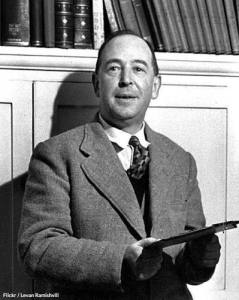
CS Lewis
By default, I am the leader of a reading group made up of seven Christian men. All of us are retired, and this activity gets us out of the house (and briefly out of our wives’ hair). We have made it through a number of books, and are now working our way through C.S. Lewis’ Space Trilogy. It is his attempt at writing science fiction — a genre perhaps fifty-plus years in development at the time the first book, Out of the Silent Planet (hereafter referred to as OSP). It was published in 1938.
A confession: I am not really a fan of Lewis. This makes me the odd duck of the group. But for the good of all, I relented. Upon reading OSP we were all scratching our heads as we tried to find its purpose. In jest, I commented that the novel is “Narnia on LSD.” There was agreement with the assessment. However, prior to our discussion of the book, I called a friend who is a champion of Lewis’ works. “What is the purpose of OSP?” There was a pause, “Well, it’s really to introduce the character of Ransom.” This honest answer gave me the key to my analysis of his character, and his importance in the three books.
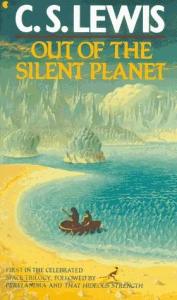 Allow me to introduce you to Elwin Ransom. He is about 40 plus-years of age. He is “a pious man,” and is a professor of philology at Cambridge University (is this nod to JRR Tolkien even though he was with Oxford?). The book begins by informing the reader that he is on a walking holiday in the English countryside. On his way to find lodging for the night, he assists a woman who is distraught: her son has not returned from his day’s work at a nearby house. Ransom, with some difficulty, makes his way to the house. Two men receive him onto their property. They are Dr Weston, an arrogant, sociopathic, elitist physicist (a parallel to our day’s arrogant, sociopathic, technocratic elite), and his investor who is named Devine, who is nearly amoral as Weston. The boy is dismissed and returns to his mother. However, to take the place of the boy, Ransom is drugged and abducted, and is then put on board Weston’s space ship which is to travel to Malacandra (Mars).
The analysis of Ransom begins with reference to Dr Martin Shaw’s book, Liturgies of the Wild. Shaw is a professor of mythologies, and in the book he analyzes the three-step process involved in the “hero’s quest” of a mythological tale. The first step, according to Shaw, is the point of Severance:
You break with the familiar when a threat comes to shake up what you thought you knew. The initiatory summons has arrived, and you have to set out, no matter how your legs may totter.
Hence, Ransom has his point of Severance that begins with his abduction. Let me add that in Tolkien’s famous works of fantasy fiction, both Bilbo and Frodo have their points of Severance, as do the rabbits of Richard Adams’ Watership Down.
After Severance comes the second step: Threshold. Shaw defines Threshold for us:
You encounter the world turned upside down. This period may last for a significant amount of time. There may be a journey…It can be baffling, depressing, and a wasteland or a sea storm, but you will be rewired in some fashion…and redeemed by the holy.
Tolkien, in his essay entitled, “On Fairy-Stories,” calls Shaw’s Threshold Faerie, or The Perilous Realm. He describes it in this way:
Faerie contains many things besides elves and fays, and besides dwarfs, witches, trolls, giants, or dragons: it holds the seas, the sun, the moon, the sky; and the earth, and all things that are in it: tree and bird, water and stone, wine and bread, and ourselves, mortal men, when we are enchanted…Most good “fairy-stories” are about the adventures of men in the Perilous Realm or upon it shadowy marches.
This is where and how Ransom is tranformed. Upon landing on Malacandra, he escapes Weston and Devine (who plan to kill him as a human sacrifice)— he runs into the bewildering and unknown world of the alien planet. Tolkien, by the above quote, states many and varied creatures may be encountered. And so it is for Ransom. He encounters Hyoi, a Hrossa, a tall otter-like creature. They befriend each other. Hyoi takes Ransom to his village where he begins to understand them and their language. Later, they, together with other Hrossa, go on a dangerous hunting expedition to kill a violent animal called a hnakra. By means of the hunting expedition, Ransom observes his “rewiring”:
It was necessary and the necessary was always possible. Perhaps, too, there was something in the air he now breathed, or in the society of the hrossa, which had begun to work a change in him.
The hnarkra, the enemy of the hrossa, was killed by them, and Ransom has “a new-found manhood.”
They had stood shoulder to shoulder in the face of and enemy, and the shape of their heads no longer mattered. and he, even Ransom, had come through it and not been disgraced. He had grown up.
Ransom’s time in Threshold — the Perilous Realm — continues, and he encounters more challenges and dangers. He meets more creatures such as the tall, spindly Sorns as well as the eldila (a species of angels), and the ruling seraph of Malacandra named Oyarsa. So, we come to the third step of Shaw’s process: The Return.
Having journeyed through the Threshold…you come upon, and take to yourself a gift that you can impart to others. The prize you gain must be shared with others, otherwise you have no return.
Ransom, though by force, had left the comfortable, the familiar, and the ordinary. He entered into Threshold — the Perilous Realm —quite apart from his “civilized” life in Cambridge. In Malacandra he had to trust an alien and immerse himself into their world, ways, and lives. There, he was passing through both danger and fear which would never have happened in England. By this, he received the gifts of manhood and courage. He will return to Earth with these gifts. The Space Trilogy will continue, and these gifts will be shared with others on another world. In this other world, Perelandra, he will re-enter the Threshold once more while on a journey commissioned by the seraph Oyarsa. .
Whether Ransom, Bilbo, Frodo — or you or me, at some time we will have our own points of Severance, Threshold, and Return thrust upon us. Whatever may come your way, my way, or our way, we are not to reside in self or curl up into some pathetic, whimpering ball. We are to step out the door to begin the journey of faith and growth in Christ who gives us our own hero’s quests.
In Christ, and together with Christ in the Threshold,
Fr Irenaeus
St Celidonius: The Man Born Blind
Posted: May 18, 2026 Filed under: Etcetera, The Eucharist and Living the Eucharist | Tags: "The Liturgies of the Wild, Do not reside in self, Dr Martin Shaw, God-spelled, JRR Tolkein, the Eucharist empowers, The fifth Sunday of Pascha, The man born blind is St Celidonius, The Perilous Realm, the sacramental healing of the man born blind Leave a comment On the fifth and final Sunday of Pascha we note the account of the healing by Jesus of the man born blind. I’ll begin the posting with the Kontakion (a hymn) of the Man Born Blind which summarizes the young man’s encounter:
I come to you, O Christ, blind from birth in my spiritual eyes, and call to you in repentance: You are the most radiant Light of those in darkness.
St John provides the Gospel text:
As he passed by, he saw a man blind from his birth. And the disciples asked him, “Rabbi, who sinned, this man or his parents, that he was born blind?” Jesus answered, “It was not that this man sinner, or his parents, but that the works of God might be manifest in him (St John 9: 1 – 3).
Allow me to emphasize, why was he born blind? The answer: That the works of God would be manifested in him. The Gospel narrative continues,
As he said this, he spat on the ground and made clay of the spittle and anointed the man’s eyes with the clay, saying to him, “Go wash in the pool of Siloam (which means Sent). So he went and washed and came back seeing (St John 9: 6 – 7).
There was clearly a sacramental aspect to his healing: The saliva of God was mixed with creation’s gift of dirt to anoint his eyes. The anointing of God was washed off in the Pool of Siloam – a type of baptism that finished off his healing.
A question arose. Was the young man who now sees the same man they all knew? The neighbors and those who had seen him before as a beggar, said, “Is not this the man who used to sit and beg”? Some said, “It is he”; others said, “No, but he is like him.” He said, “I am the man” (St John 9: 8 – 9).
The controversy continued, and he was brought before the Jewish authorities to give answers. His parents were also brought before them to confirm his identity:
“…Is this your son, who you say was born blind? How then does he now see?” His parents answered, “We know that this is our son, and that he was born blind, but how he now sees we do not know, nor do we know who opened his eyes. Ask him; he is of age, he will speak for himself.” His parents said this because they feared the Jews, for the Jews had already agreed that if any one should confess him to be Christ, he was to be put out of the synagogue. Therefore, his parents said, “He is of age, ask him” (St John 9: 19 – 23).
This account continues,
Jesus heard that they had cast him out, and having found him he said, “Do you believe in the Son of Man?” He answered, “And who is he, sir, that I may believe in him?” Jesus said to him, “You have seen him, and it is he who speaks to you.” He said, “Lord, I believe”; and he worshipped him (St John 9: 35 – 38).
Thus, we have two contrasting responses to this miracle: That of the young man, and of his parents. Regarding the young man, his life was transformed by his encounter with Christ. Yet, he experienced loss. He apparently lost his relationship with his parents. He was expelled from the Synagogue and lost his spiritual family. A crisis occurred for him after the miracle and transformation of his life. He did not return to his past, to the familiar, and the safe. He moved into the unknown, into a wild, foreign land as he came to join himself to Christ.
Then, we have his parents. Though they knew that their son could now see, they did not rejoice with their son. They turned away from the miracle that was a manifestation of the work of the Messiah. His parents could not accept the implications of his healing: They would not risk expulsion from the Synagogue. When confronted with authority, they returned to comfort, to the known, and back to the environment in which they could navigate with their spiritual blindness.
What about us? We all have been in, or may now be in, or will soon be in a challenging situation, a crisis of our own. What will we do? What have I done?
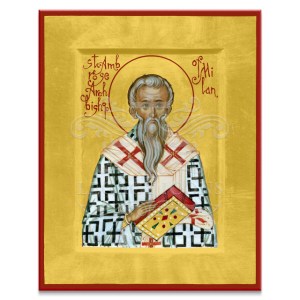 I present to you such an experience which lasted about two years. In the early 1990s, I was a theologically serious evangelical in a Protestant seminary. I was the teaching assistant for my theology professor (an Anglican). I asked for an independent study to explore the Sacraments. I had no idea what I had asked. My assigned readings turned me to both the Scriptures and the Church Fathers. Upon reading St Ambrose of Milan and St Kyril of Jerusalem, and a deep dive into the Greek text of St John’s sixth chapter I was undone. I had a “paradigm shift”, “my apple cart was overturned,” and I “went through the looking glass.” I came to my startling conclusion: The Eucharist gives to the faithful the Body and Blood of Christ! A watershed moment occurred. I could no longer remain an evangelical. I must move into the unknown!
Upon this discovery, I wanted to be as humanly close to the Eucharist as possible! But, my wife and I were not yet ready for the Orthodox Church, So, ordination was sought and obtained in the Charismatic Episcopal Church (CEC) in February, 2003. This proved to be a huge mistake.
In addition to the gift of the Eucharist, I also, by the grace of God, met Mary, the Mother of God (Theotokos), and the saints, together with other treasures of the ancient Church. Conflict with my bishop began because he was very unhappy with the gifts and new relationships I now had. This crisis was, in truth, the forceful hand of the Holy Spirit moving me away from the “wanna-be” group.
Enter crisis. Do I stay and remain a priest to be with their Eucharist, yet be forced to deny the Theotokos and the Communion of the Saints? The answer to this question became a long, agonizing process to get to “No.” As with the young man, I again departed from the familiar. I resigned and removed my clerical collar. But with this loss, I and my family found the One, Holy, Catholic and Apostolic Orthodox Church. The priest of the parish became not only my friend, but also my advocate and guide in this new land.
A brief detour is made. I turn to Professor Martin Shaw’s book: The Litugies of the Wild, Myths That Make Us. Dr Shaw had a similar experience. He abandoned the shallow faith of his youth and wandered spiritually for many years. He later discovered the Orthodox Church: “Now I was hungry for a Christianity as huge as the forest” (17, 18).
So, back to my story. I was now, too, in this Forest. I broke from what held me, which upon reflection was the idol I made of my former priesthood in the CEC. Thankfully, my calling to the priesthood was recognized and acknowledged. But, to obtain a true ordination, there would be even further sacrifices: I had to leave my job as a clinical pharmacist which I held for 20 years. My new, true bishop called me to study at Saint Vladimir’s Orthodox Seminary for one year. This would apart from my family.
I entered again into the wilds, into what JRR Tolkein calls “Faerie,” or the “Perilous Realm.” Again, two years earlier, I took off the western clerical collar and put away old vestments. I felt “clerically naked.” But God was weaving new vestments for me, and would have me ordained into the True Church, into a greater union with Christ, and a complete Eucharist. (And, I received a new and better job as a clinical pharmacist.)
Each one of us now, or in the near future, will be faced with the choice made by a crisis: Will we be like the young man’s parents who dared not move? Or, will we be like the young man who saw moved forward into a the unknown where he would walk with Jesus? He became St Celidonius (this tradition is acknowledged by both the Orthodox and Roman Churches). He ventured into the Perilous Realm of ancient Gaul (France) as evangelist and bishop. He founded a church in Nimes.
Back to the subject matter of the book by Dr Shaw. He is a professor of mythology. Additionally, he conducts “seminars” in the wilds of the UK and elsewhere. In this wild setting, he asks this disturbing question: “What part of you has come to die?” His desire is to urge people to choose to venture in the Perilous Realm. When they become challenged by a crisis, he wants them to create their own sacred stories, or myths, after they complete their quest.
Per Dr Shaw, there are three stages of the process of discovery and growth:
- SEVERANCE: “You will break with the familiar when a threat comes to shake up what you thought you knew. The initiatory summons has arrived, and you have to set out, no matter how your legs may totter.”
- THRESHOLD: “You encounter the world turned upside down.” This period may last for a significant amount of time. “There may be a journey…It can be baffling, depressing, and wasteland or a sea storm, but you will be rewired in some fashion…and redeemed by the holy.”
- RETURN: Having journeyed through the Threshold with Christ, “…you come upon, and take to yourself a gift that you can impart to others. The prize you gain must shared with others, otherwise you have no return (49 – 51).
Whatever may come your way, my way, our way, DON’T RESIDE IN SELF! We are not to succumb to the opioid-like call to stay in communion with the four idols of these days: Convenience, Comfort, Pleasure, and Security. When those days arrive (and they will) we must be ready to enter into severance and the Perilous Realm.

Jesus Christ Conquers
A word of caution is offered, we cannot create our own crisis. It must come upon us unbidden. And I put forward a second word of caution: One can’t enter the Perilous Realm without, as Tolkein states, “being spelled.” What is this? I am referring to the Gospel. This word is a contraction of the older English form, “God-spell.” We are God-spelled by all we encounter and take in, by, and from the Divine Liturgy. This includes, but is not limited to, “The Cross, the Tomb, the Resurrection on the third day, the Ascension into Heaven, the Sitting at the Right Hand, and the Second and glorious Coming Again.” Beyond this, we are God-spelled most fully by receiving the Body and Blood of Christ via the Eucharist which empowers us to conquer and overcome.
The Scriptures and the accounts of the saints, including St Celidonius, are filled with heroes and heroines. They all entered the Perilous Realm being God-spelled by Christ. They all received the gift and treasure of having Christ more fully formed in them. They all possessed his wisdom.
So let it be with us. We will not be alone in the Perilous Realm. And, while we journey there, let us take to heart St Paul’s commands: “Rejoice always. Pray constantly. Give thanks in with and for all things, for this the will of God for you in Christ Jesus (1 Thessalonians 5: 16 – 18).
The Divine Liturgy nears its conclusion with these words: “Let us go forth in peace!” With these words we are commissioned. Our heroic God has given us a fantastic mission as we enter the Perilous Realm having been God-spelled. There and thus, let us gain Christ more fully, that we may unfold him to each other, and to the darkened and depraved world around us.
In Christ our Heroic God,
Fr Irenaeus

