Guitars Reviewed: Yamaha A4K Limited and A5R ARE
Posted: November 17, 2018 Filed under: Music and Guitars | Tags: Guitar review: Yamaha A4K Limited 2018, Guitar review: Yamaha A5R ARE, Guitars reviewed: Yamaha's A4K Limited 2018 and A5R ARE, Review of two Yamaha A Series guitars: A4K Limited 2018 and A5R ARE, Yamaha A Series guitars reviewed 6 CommentsConfession: I suffer from G.A.S. (Guitar Acquisition Syndrome). I’m not in denial, but I don’t see it as a problem. No one does except my wife (wives must always, in some way, be opposed to their husband’s interests). In fact, those to whom she expresses her misplaced concern see no problem with my G.A.S. (I love enablers!). In this posting is reviewed my latest acquisition: Yamaha’s A4K Limited, as well as its sibling, the A5R ARE. They are both dreadnoughts with built-in electronics, and are all solid wood, and very well made guitars.

A4K Limited
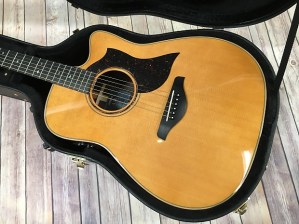
The dreadnought A4K Limited is an all koa guitar — solid top, back, and sides. As you may know, koa is a hard wood, and comes principally from Hawaii. Koa, in my opinion, gives a bright , crisp, and clean tone which is quite pleasant. Other materials of this guitar are mahogany neck, and ebony fretboard and bridge. The binding appears to be mahogany, as is the case for the A5R ARE. The lower bout is a generous 16.25 inches (41.3cm), and the nut width is a typical 1 11/16 inches (43mm) of a dreadnought.
A5R ARE
The A5R ARE sibling has a solid sitka spruce (torrefactioned, or ARE as Yamaha describes the process), and solid rosewood back and sides. It too, has a mahogany neck, with ebony fretboard and bridge. The body and neck dimensions are identical to the A4K Limited.
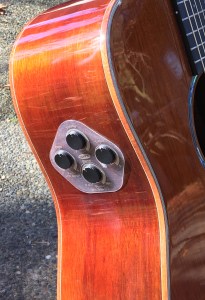 Both models have identical electronics which consist of volume, treble, bass, and blend (you can mix mic and under saddle piezo pickups to you taste). The controls are laid out on the upper bout on the bass side of the bodies. A plastic “dear dummy” applique surrounds the controls and labels them for the player. The packaging that comes with the guitars contains smaller decals which are to be applied for identification at each knob. Both models have an attractive pick guard (surprisingly rare these days on many dreadnoughts).
 Father Irenaeus Williams