Possession and Control
Posted: July 15, 2025 Filed under: Etcetera | Tags: "Hail full of grace", demonic possession as a mockery of the Incarnation, Excorcism of the Gadarene Demoniacs, Greek perfect passive participle, self-control vs control of others, St Luke 1: 38 "Behold I am the handmaid of the Lord; let it be done to me according to your word Leave a comment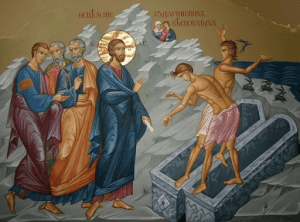 We read of Jesus exorcising two demon possessed men in the eighth chapter of St Mattew’s Gospel:
And when he came to the other side, to the country of the Gadarenes, two demoniacs met come, coming out of the tombs, so fierce that no one could pass that way. And behold, they cried out, “What have you to do with us, O Son of God? Have you come here to torment us before the time? (St Matthew 8: 28 – 29)
Jesus, of course, casts out the demons from the men, and the demons then enter into the nearby herb of swine. The now possessed swine run off a cliff and drown in the awaiting water (St Matthew 8:30 – 32).
Many Christian sources of all traditions state that demonic activities are increasing in western countries. Given the state of our culture, perhaps this is very true. As a priest in the Orthodox Church I have performed three exorcisms of homes. Those living in them came to me with the complaint of disturbing experiences encountered over an extended period of time. The power and authority of God removed the disturbing sources of their troubling experiences. Thankfully, I have had no other such experiences — yet.
Returning to the above gospel account, and all such occurrences, it could be stated that the possession of a human by a demon is a mocking of the Incarnation. I will present my case by the following brief contrasts.
The holy Incarnation came about by Mary’s obedient consent to God’s plan for the Incarnation presented to her by St Gabriel:
Behold, I am the handmaid of the Lord; let it be done to me according to your word (St Luke 1: 38).
A demon possession likely does NOT come about by consent. Though the person possessed may have been steeped in wicked and depraved practices.
In stark contrast Mary was steeped in faith and obedience to the One True God, for she was prepared for this most holy service long before the day of the Annunciation: “Hail, full of grace, the Lord is with you!” (St Luke 1: 28). The Greek phrasing is, literally, “…having been graced…” and is a translation of the verse’s perfect passive participle. The use of such a verbal tense means an event or action took place in the past, but the effect of the action continues into the present. Thus again, God’s preparation of Mary occurred long before St Gabriel’s greeting, and long before her birth.
The Incarnation occurred for our salvation which has love — God’s love — as its source.
The demon possesses for the destruction of the person. It is done out of hatred and contempt. Not only hatred of humanity is its source, but their hatred is extended to the entirety of material creation. Hence, also the destruction of the herd of swine. They fell to their death. Death is the realm of Satan and his demons:
The LORD said to the serpent, “Because you have done this cursed are you above all wild animals; upon your belly you shall go, and dust you shall eat all the days of your life” (Genesis 3: 14).
Dust is the product of death and resulting decomposition.
Christ is all powerful: He calms storms, heals diseases, and raises the dead. We read of his power and authority:
And Jesus came and said to them, “All authority in heaven and on earth has been given to me” (St Matthew 28: 18).
The power and works of Satan and demons but a forgery or immitation however convincing they may appear. They have a limited power and authority unlike Christ.
From the service of Baptism — the Second Exorcism — we have this excerpt which explains their limited strength:
Come out of the man, and in nowise enter a second time into him: Depart! Acknowledge the vainness of your might, which has not power even over swine…
These enemies are neither omniscient, nor omnipresent.
Christ is in us by our consent arising from our faith in him. He acts within us only by our invitation, and his actions which lead to our sanctification.
The demon controls without consent as a vile, defiling tyrant. The demon hijacks the will and desires to take the possessed to their destruction.
I now shift gears and move to the subject of control. The desire to control exists in contrast to the desire to influence, exhort, or encourage. I use to words influence, exhort, and encourage when such words and actions address the true need to direct someone to proper decisions and good conduct which would lead to a healthy, wholesome outcome.
Control: The only proper control is self-control. This is a disciplining of the self, of the will, for the gain of goodness, holiness, health, etc. The human attempt to manipulate and control another human being is a parallel to demonic possession. We have observed,
The controlling spouse
The controlling parent
The controlling child
The controlling and abusive bully
The manipulative controlling employer or supervisor
The controlling co-worker
All such control is for self-gain and the attaining of power over another human being. It is never for the well being of another. Hence, it is demonic! Hence, there needs to be an exorcism of repentance!
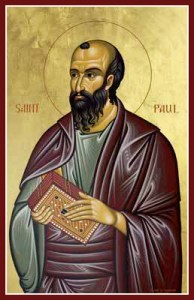 How we are to act with one another? St Paul gives us many examples. I present two such examples from his epistles:
Now we urge you brethren, to warn the idle, encourage the faint-hearted, help the weak, and to be patient with all. Do not repay evil for evil, but always pursue the good both for one another and for all. Rejoice always. Pray constantly. Give thanks in, with, and for all things for this is the will of God for you in Christ Jesus (1 Thessalonians 5: 15 – 18).
Put on then, as God’s chosen ones, holy and beloved, compassion, kindness, lowliness, meekness, and patience, forbearing one another and, if one has a complaint against another, forgiving each other; as the Lord has forgiven you, so you must also forgive. And over all these put on love, which binds everything together in perfect harmony. And let the peace of Christ rule in your hearts, to which indeed your were called in the one body. And become thankful. Let the word of Christ dwell in you richly, as you teach and admonish one another in all wisdom, and as you sing psalms and hymns and spiritual songs with thankfulness in your hearts to God. And whatever you do, in word or deed, do everything in the name of the Lord Jesus, giving thanks to God the Father through him (Colossians 3: 12 – 17)
May the Holy Trinity’s love guide and indwell in us that we may influence, exhort, and encourage one another to the gain of purity and salvation.
In Christ,
Fr Irenaeus
 Father Irenaeus Williams