Posted: March 21, 2024 | Author: Fr. Irenaeus | Filed under: Etcetera, Music and Guitars | Tags: Commentary on the Kinks' "Dedicated Follower of Fashion", humility and satire, The Kinks' "Dedicated Follower of Fashion, The Prayer of St Ephraim the Syrian, true satire |
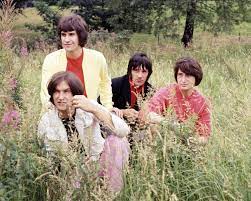
The Kinks circa 1967 (Ray is standing.)
I have an admission: I love the music of the British Invasion of the 1960s. When the Beatles, Rolling Stones, et al., hit the shores of America I was a little boy in grade school. At that time my only interests were baseball and the space program that involved Mercury, Gemini, and Apollo missions. I didn’t discover the Beatles’ music until after their breakup in 1970 when I heard George Harrison’s “What Is Life”. I then immersed myself in the Beatles’ music and followed their post-Beatles careers faithfully. I soon discovered the Rolling Stones, and the Kinks among other bands. I love the sound of the era, and I have learned to play dozens of songs from that decade on guitar.
Among those songs is the Kinks’ “Dedicated Follower of Fashion.” It was composed by Ray Davies (front man and rhythm guitarist), and was released as a single throughout the world in 1966. It has the flavor of the “Music Hall” era. We, today, would think of it as a “novelty song.”
They seek him here, they seek him there, his clothes are loud, but never square. It will make or break him so he’s got to buy the best, ‘Cause he’s a dedicated follower of fashion.
And when he does his little rounds, ‘round the boutiques of London Town, Eagerly pursuing all the latest fads and trends, ‘Cause he’s a dedicated follower of fashion.
Oh yes he is (oh yes he is), oh yes he is (oh yes he is). He thinks he is a flower to be looked at, and when he pulls his frilly nylon panties right up tight, he feels a dedicated follower of fashion.
A little history of this time in London and other urban areas is in order. Some of the youth of the day had one peculiar social division: Mods versus Rockers. As I recall, the Mods followed fashion, and other cultural trends. The Rockers were of a rougher cut, and cared little about fashion, etc. If you could extrapolate these two groups musically into the 1970s, Mods, I would imagine, would lean towards “Glam Rock,” while the Rockers would be fans of the “Punk Rock” scene.
Oh yes he is (Oh yes he is), Oh yes he is (Oh yes he is). There’s one thing that he loves and that is flattery. One week he’s in polka-dots, the next week he is in stripes. “Cause he’s a dedicated follower of fashion.

Somewhere in Piccadilly
Clearly, the Kinks’ song is a rather scathing critique of the ephemeral and superficial “dandies” and the “swingers” of London, and those who endlessly shopped Carnaby Street and other trendy locations, perhaps even Piccadilly Circus.
They seek him here, they seek him there, In Regent Street and Leicester Square. Everywhere the Carnabetian Army [referring to Carnaby Street] marches on, Each one a dedicated follower of fashion.
Oh yes he is (Oh yes he is), Oh yes he is (Oh yes he is). His world is built ‘round discotheques and parties. This pleasure-seeking individual always looks his best ‘cause he’s a dedicated follower of fashion.
The song is clever and humorous. The song is a satirical jab at other peoples’ foibles.
Oh yes he is (Oh yes he is), Oh yes he is (Oh yes he is). He flits from shop to shop just like a butterfly. In matters of the cloth he is as fickle as can be, ‘Cause he’s a dedicated follower of fashion. He’s a dedicated follower of fashion. He’s a dedicated follower of fashion.
However, if such (and all) satirical material is only aimed at the “other” without some humility, the humor becomes ridicule and offers only a caricature of those targeted. If one uses satire, one has to accept it when used on “our people”, or us. For satire to be of true value, one has to laugh with those targeted, not just at them. We all have to be able to laugh at ours, and ourselves.
About a decade ago I wrote a less satirical (and worthless too, no doubt!) song I called “Lewis and Clark.” Here is the first verse:
Lewis, and Clark, and Sacajawea, they say, “See ya, See ya, wouldn’t want to be ya! You’re stuck in traffic all day long, and your stylist got your color all wrong.”
I stumbled upon the file containing its lyrics and chords a short while ago. It prompted me to think of “Dedicated Follower of Fashion.” My thoughts then turned towards me. Though I had a simple four mile commute to work, I, too, at times, spent far too long stuck in freeway traffic in the Puget Sound area of Washington State. Though I never have colored my hair, I, too, have vanity. What was my motivation for those lyrics? Was I willing to see myself as the subject of the jab? I have decided not to resuscitate the song until my motives are properly sorted — perhaps, better, ditch it altogether.
As noted in the title of this posting, this brings me to the Prayer of St Ephraim the Syrian used so frequently by Orthodox Christians, and especially during the season of Great Lent:
O Lord and Master of my life, give me not the spirit of sloth, despair, lust of power, and idle talk. But rather give to me the spirit of chastity, humility, patience and love to your servant. Yes, O Lord and King, grant me to see my own transgression and not to judge my brother, for you are blessed unto ages of ages. Amen.
In this highly divisive and divided society, where we pick sides and find enemies all around us, St Ephraim’s Prayer should inform our consciences. We need to acknowledge our own weaknesses, foibles, and be charitable about our neighbors’ positions on politics — and even fashion!
Here is a link to “Dedicated Follower of Fashion” (please excuse the brief ad): https://youtu.be/oxYGOSSj9A0?si=ULEvkx-nPd9ysNPy
In Christ with all of my own foibles,
Fr Irenaeus
 Father Irenaeus Williams
The Kinks’ “Dedicated Follower of Fashion,” Satire, and the Prayer of St Ephraim the Syrian
Posted: March 21, 2024 | Author: Fr. Irenaeus | Filed under: Etcetera, Music and Guitars | Tags: Commentary on the Kinks' "Dedicated Follower of Fashion", humility and satire, The Kinks' "Dedicated Follower of Fashion, The Prayer of St Ephraim the Syrian, true satire | Leave a commentThe Kinks circa 1967 (Ray is standing.)
I have an admission: I love the music of the British Invasion of the 1960s. When the Beatles, Rolling Stones, et al., hit the shores of America I was a little boy in grade school. At that time my only interests were baseball and the space program that involved Mercury, Gemini, and Apollo missions. I didn’t discover the Beatles’ music until after their breakup in 1970 when I heard George Harrison’s “What Is Life”. I then immersed myself in the Beatles’ music and followed their post-Beatles careers faithfully. I soon discovered the Rolling Stones, and the Kinks among other bands. I love the sound of the era, and I have learned to play dozens of songs from that decade on guitar.
Among those songs is the Kinks’ “Dedicated Follower of Fashion.” It was composed by Ray Davies (front man and rhythm guitarist), and was released as a single throughout the world in 1966. It has the flavor of the “Music Hall” era. We, today, would think of it as a “novelty song.”
A little history of this time in London and other urban areas is in order. Some of the youth of the day had one peculiar social division: Mods versus Rockers. As I recall, the Mods followed fashion, and other cultural trends. The Rockers were of a rougher cut, and cared little about fashion, etc. If you could extrapolate these two groups musically into the 1970s, Mods, I would imagine, would lean towards “Glam Rock,” while the Rockers would be fans of the “Punk Rock” scene.
Somewhere in Piccadilly
Clearly, the Kinks’ song is a rather scathing critique of the ephemeral and superficial “dandies” and the “swingers” of London, and those who endlessly shopped Carnaby Street and other trendy locations, perhaps even Piccadilly Circus.
The song is clever and humorous. The song is a satirical jab at other peoples’ foibles.
However, if such (and all) satirical material is only aimed at the “other” without some humility, the humor becomes ridicule and offers only a caricature of those targeted. If one uses satire, one has to accept it when used on “our people”, or us. For satire to be of true value, one has to laugh with those targeted, not just at them. We all have to be able to laugh at ours, and ourselves.
About a decade ago I wrote a less satirical (and worthless too, no doubt!) song I called “Lewis and Clark.” Here is the first verse:
I stumbled upon the file containing its lyrics and chords a short while ago. It prompted me to think of “Dedicated Follower of Fashion.” My thoughts then turned towards me. Though I had a simple four mile commute to work, I, too, at times, spent far too long stuck in freeway traffic in the Puget Sound area of Washington State. Though I never have colored my hair, I, too, have vanity. What was my motivation for those lyrics? Was I willing to see myself as the subject of the jab? I have decided not to resuscitate the song until my motives are properly sorted — perhaps, better, ditch it altogether.
As noted in the title of this posting, this brings me to the Prayer of St Ephraim the Syrian used so frequently by Orthodox Christians, and especially during the season of Great Lent:
In this highly divisive and divided society, where we pick sides and find enemies all around us, St Ephraim’s Prayer should inform our consciences. We need to acknowledge our own weaknesses, foibles, and be charitable about our neighbors’ positions on politics — and even fashion!
Here is a link to “Dedicated Follower of Fashion” (please excuse the brief ad): https://youtu.be/oxYGOSSj9A0?si=ULEvkx-nPd9ysNPy
In Christ with all of my own foibles,
Fr Irenaeus